
Last updated October 17, 2026
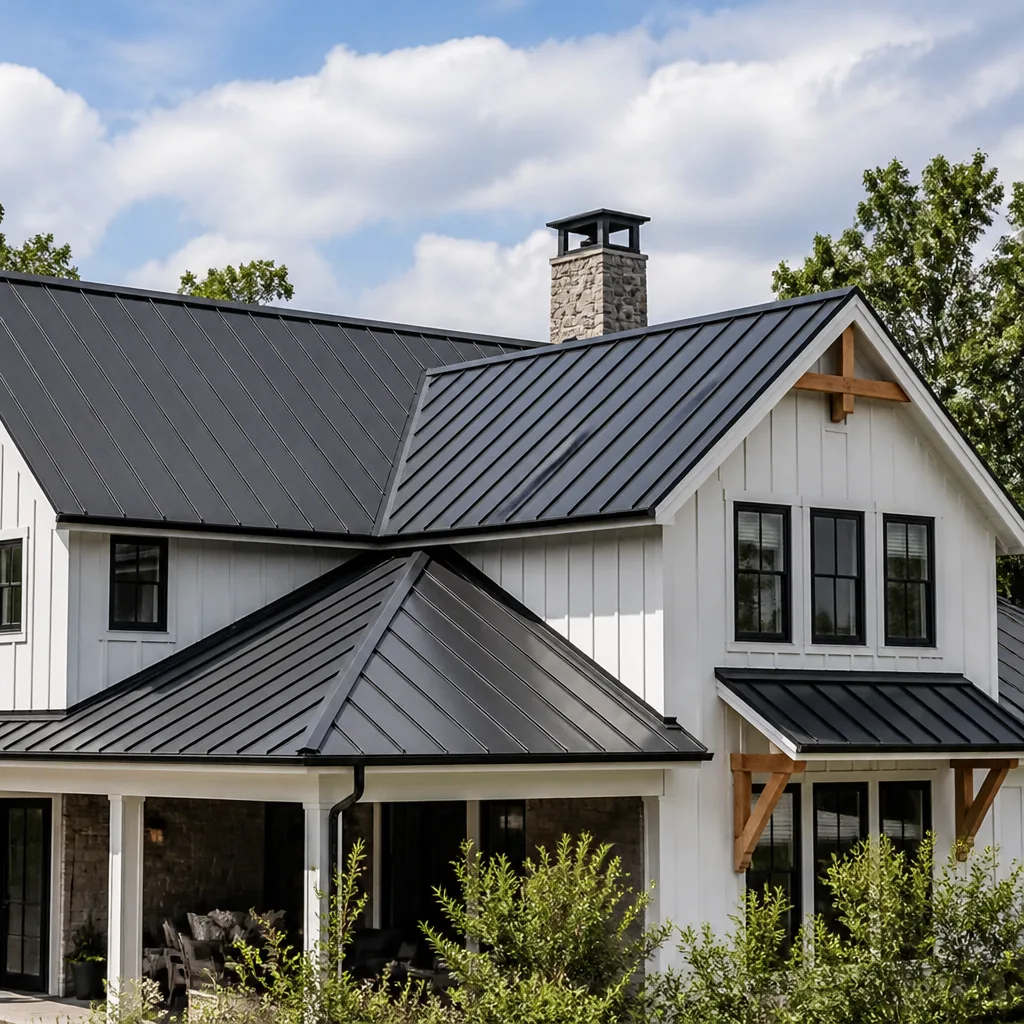 Metal roofing
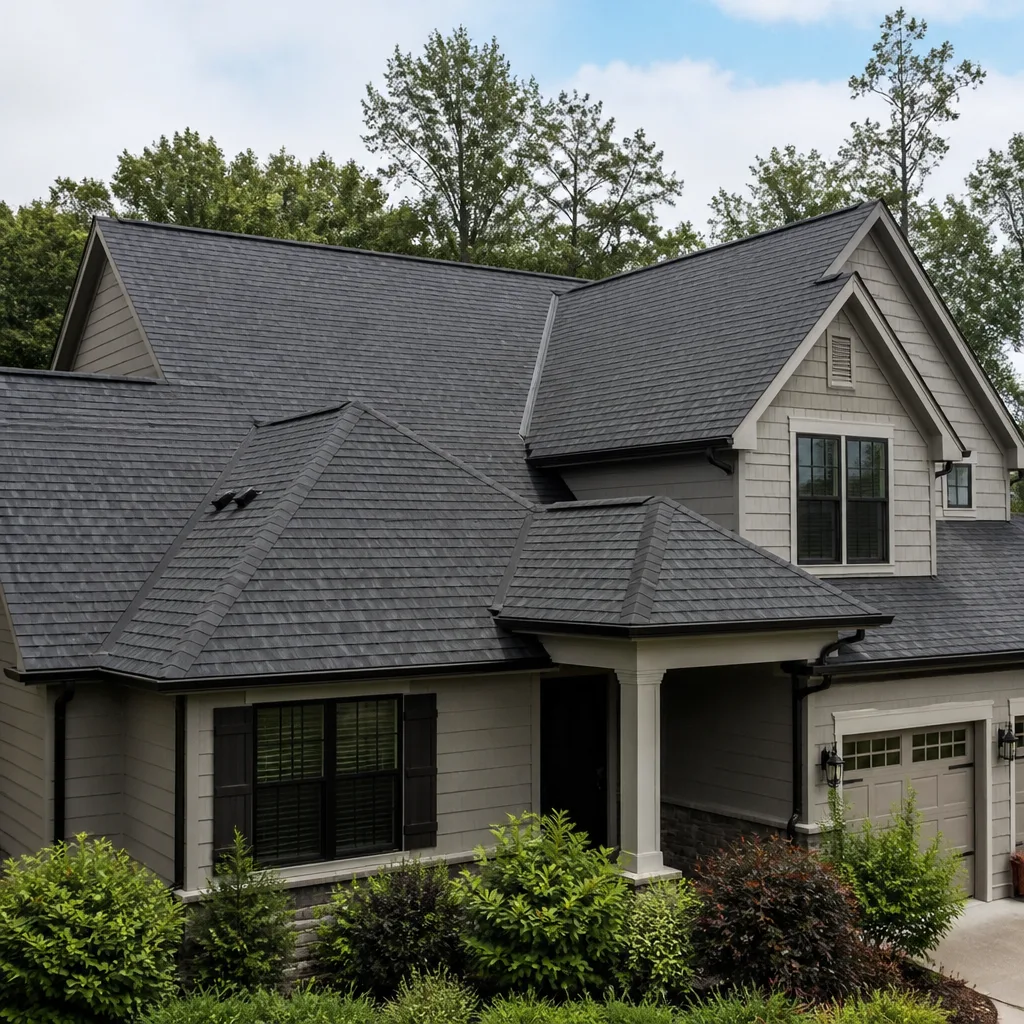 Architectural shingles
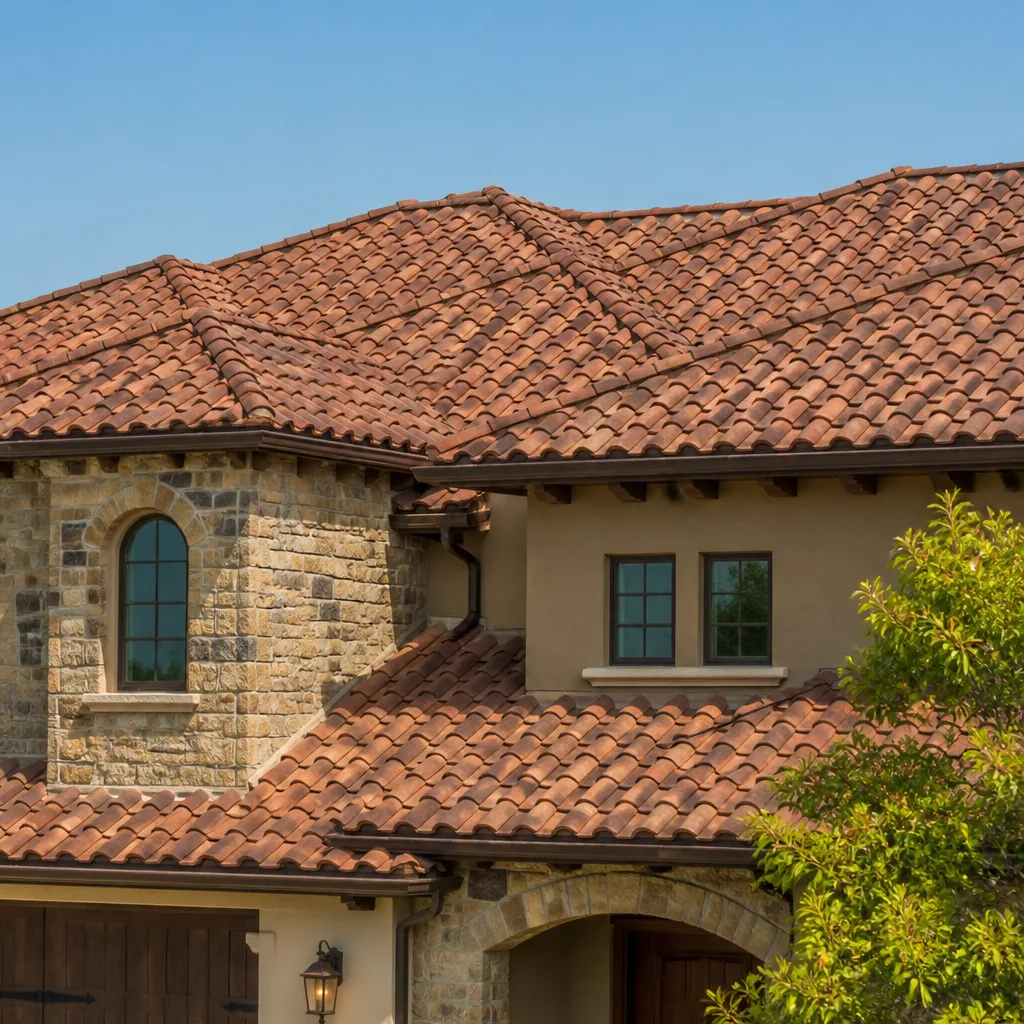 Tile roofing
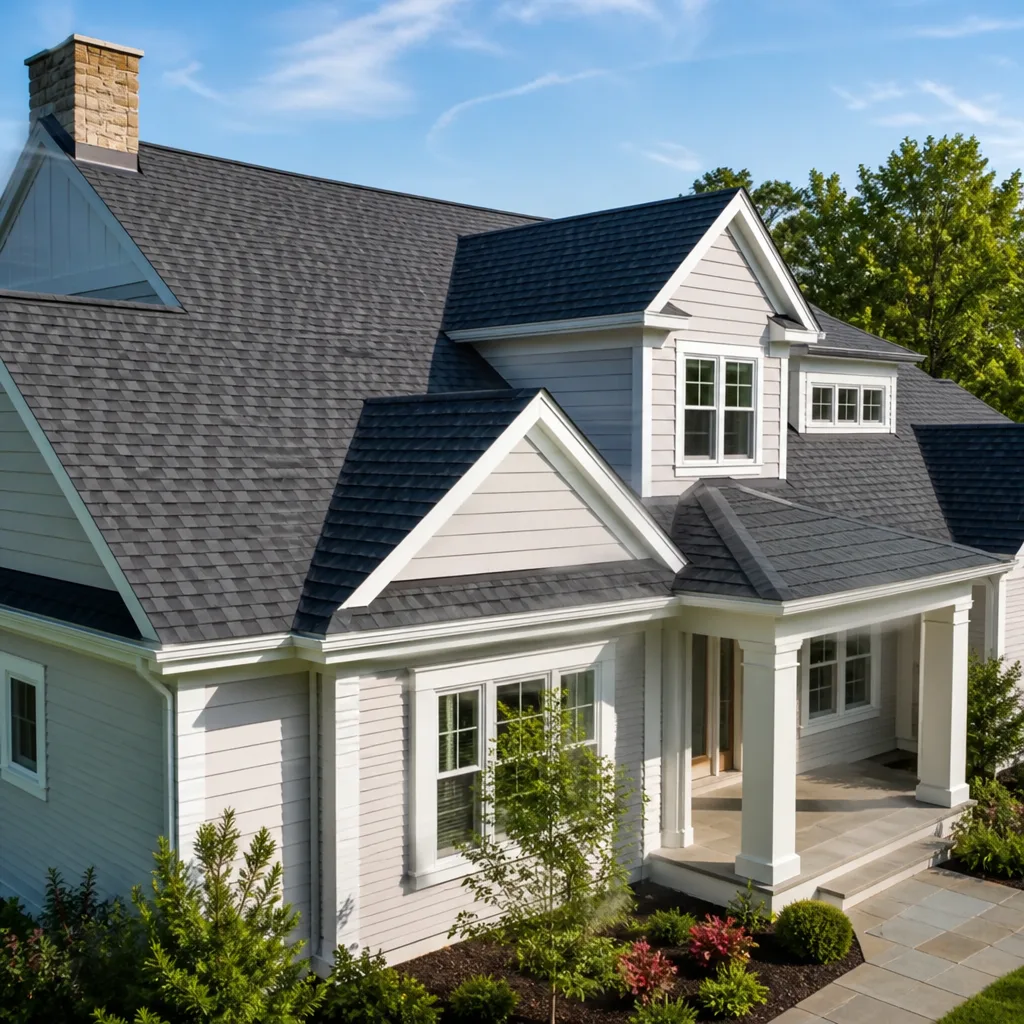 GAF
GAF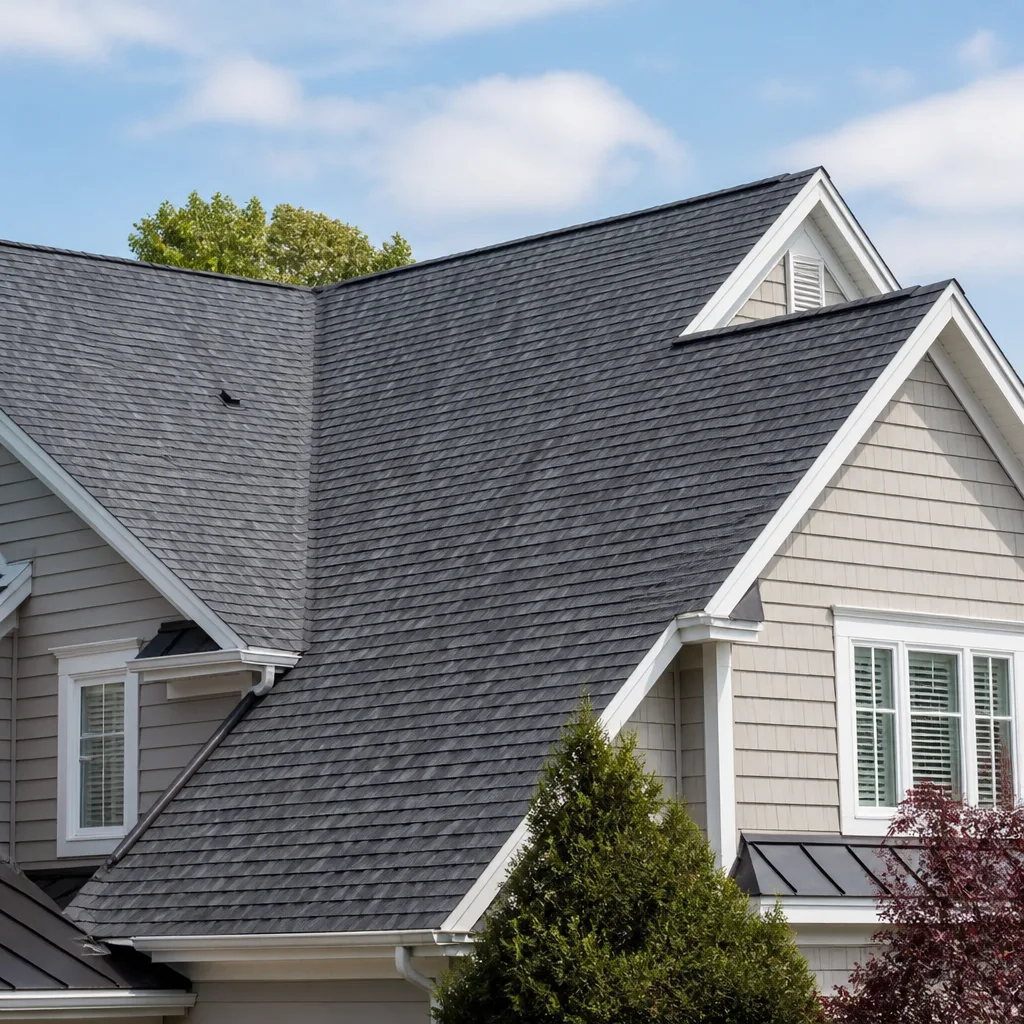 Owens Corning
 Flat & low-slope
Free roof inspection with deck photos before we talk money - GAF and Owens Corning certified installation
The Complete Guide to Roofing in Orlando
Orlando averages 96 thunderstorm days per year, more than any other major U.S. city, yet most roofing guides written for “Florida” are really written for the coast, where wind governs everything. In Central Florida, heat and standing water kill more roofs than wind does, and that changes what you should buy, how you should maintain it, and what you should expect to pay. This guide walks through every major roofing decision as it actually applies to Orlando, from material choices to permits to the repair-versus-replace math, so you can spend your money where it protects your home and skip the upgrades that only matter three counties east. For more guides & resources on protecting your Central Florida home, explore our blog.
Quick Answer
Roofing in Orlando means choosing materials and systems built for intense UV exposure, daily summer thunderstorms, and the Florida Building Code requirements that went into effect after the 2004 hurricane season. Most asphalt shingle roofs in Central Florida last 15 to 20 years rather than the 25 to 30 manufacturers advertise, and the single most common cause of premature failure we see is inadequate attic ventilation, not storm damage. A full roof replacement in Orlando typically runs $9,000 to $18,000 depending on square footage and material, while targeted repairs usually stay between $350 and $1,200.
Styles & brands we work with
Table of Contents
- Why Orlando’s Climate Changes the Roofing Conversation
- Material Priority in Orlando: UV and Thermal Cycling Before Wind
- How the 2004 and 2007 Code Overhauls Changed What’s Legal on Your Roof
- Attic Ventilation: The 12-Year Killer Most Guides Skip
- Orange, Osceola, and Seminole County Permits: What Actually Affects Your Timeline
- Material Lifespan Reality Check for Central Florida Heat
- Repair or Replace: The Orlando Math
- How to Choose a Roofing Contractor in Orlando Without Getting Burned Again
Why Orlando’s Climate Changes the Roofing Conversation
Orlando sits roughly 45 miles inland from the Atlantic and 90 miles from the Gulf, which means it escapes the direct storm surge and sustained Category 5 winds that define coastal roofing, but it trades that for something quieter and more relentless: heat, humidity, and daily thermal expansion. Summer attic temperatures in Orlando routinely reach 140 to 160 degrees Fahrenheit, and a dark asphalt shingle surface can hit 180 degrees on a July afternoon. When an afternoon thunderstorm drops that surface by 50 degrees in ten minutes, the shingle mat contracts rapidly. Do that 96 times a year for a decade and you have a roof that ages from thermal fatigue, not just weather exposure.
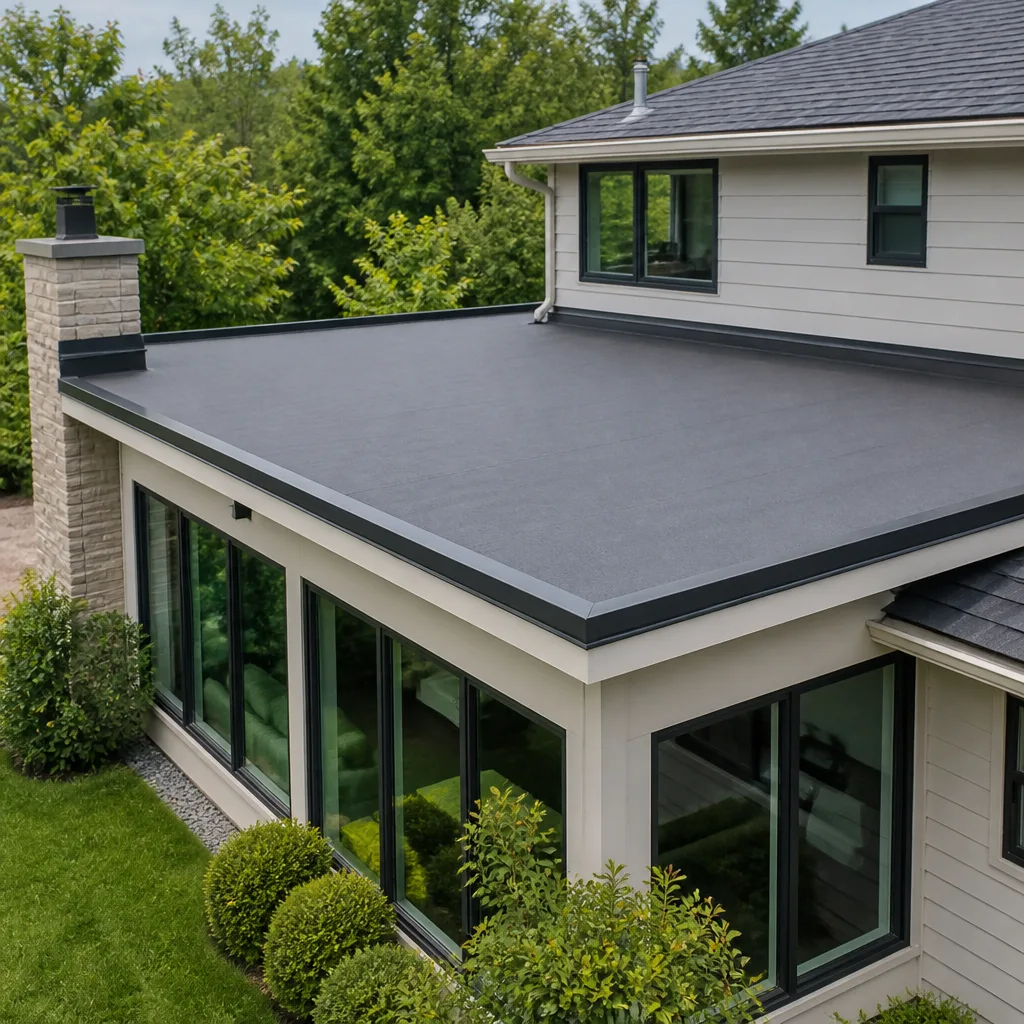
The standing water problem is equally real and frequently misunderstood. Orlando’s afternoon storms deliver short, intense bursts of rain rather than days-long coastal soaking, but the flat and low-slope sections common on ranch homes and 1970s subdivisions hold that water against flashing and seams far longer than a steep coastal roof would. Ponding water on a low-slope Orlando roof accelerates membrane breakdown and creates entry points at pipe boots and vents that would stay dry on a steeper pitch. When we inspect a roof in neighborhoods like Conway or Azalea Park, we look at the low-slope transitions first, because that’s where Central Florida roofs fail first.
The practical takeaway: in Orlando, your roofing priorities should be UV-resistant materials, proper ventilation, and water-shedding details around penetrations. Wind ratings matter, but they’re secondary for most inland ZIP codes. A roof that breathes and sheds water quickly will outlast a “hurricane-rated” roof that cooks itself from the inside.
Material Priority in Orlando: UV and Thermal Cycling Before Wind
Coastal Florida guides tell you to buy the highest wind-rated shingle you can afford. In Orlando, that advice is backwards. Wind uplift ratings matter most within a few miles of the coast; inland, the failure mode is heat-driven degradation, granule loss, and thermal splitting. The material priority list for an Orlando roof looks like this:
- UV-resistant shingle construction. Look for shingles with heavy granule embedment and a fiberglass mat designed for high-heat exposure. CertainTeed’s Landmark series and GAF’s Timberline HDZ both hold up well in Central Florida’s sun when installed correctly, but the installation matters more than the brand.
- Reflective or lighter color options. A lighter shingle absorbs less solar energy, which reduces attic temperature by 10 to 15 degrees and extends shingle life. This is a bigger durability factor in Orlando than any wind rating.
- Proper underlayment. In Orlando’s daily summer rain, underlayment is your last line of defense when a shingle fails. A synthetic underlayment with high tear strength outperforms felt in Central Florida humidity.
- Wind rating. Yes, it matters, but once you’re at a 110 mph rating or above for an inland Orlando home, additional wind rating is diminishing returns. Spend that money on ventilation and installation quality instead.
Concrete tile, particularly from manufacturers like Boral, deserves its own mention. Tile roofs handle Orlando’s UV exposure better than any asphalt product and can last 40 to 50 years in Central Florida if the underlayment is replaced periodically. The catch is structural weight: many 1970s and 1980s Orlando homes were not framed to carry tile, and retrofitting adds cost. If you’re considering tile on an existing home, have the truss system evaluated before you fall in love with the look.
For most Orlando homeowners, the right choice is a mid-to-premium architectural asphalt shingle in a light color with proper ventilation underneath. That combination addresses the actual failure modes of Central Florida heat and daily storm cycles without overpaying for coastal wind performance.
How the 2004 and 2007 Code Overhauls Changed What’s Legal on Your Roof
The 2004 hurricane season, with Charley, Frances, and Jeanne crossing Central Florida, exposed how badly Florida’s older building codes had failed. Homes lost roofs at wind speeds far below what they should have survived, and the failure was almost always in the connections, not the shingles. The Florida Building Code overhauled roofing requirements in response, and the 2007 update tightened them further.
What changed for Orlando homeowners specifically:
- Re-nailing requirements. When a roof is replaced on a home built before 2004 in an area where the design wind speed exceeds 110 mph, the decking must be re-nailed to the trusses at a tighter spacing, typically every 6 inches. This is a code requirement, not an upsell, and it adds meaningful cost to a replacement.
- Secondary water barrier. Peel-and-stick underlayment is now required in the high-wind zones of the roof perimeter, including eaves, valleys, and around penetrations. This directly addresses the water intrusion that follows shingle loss.
- Roof-to-wall connections. For homes in the windborne debris region (most of Orange, Osceola, and Seminole counties), the roof sheathing must be connected to the wall structure with metal connectors, not just toe-nails. On a re-roof, this means adding clips or straps where accessible.
Here’s the part most guides miss: if your Orlando home was built before 2004 and suffers enough roof damage to require a permit, the repair often triggers a full replacement under the current code. The logic is simple: you can’t re-nail decking to current code and install a new secondary barrier on a section of a 25-year-old roof without creating a patchwork that violates the code’s continuity requirements. When a pre-2004 roof in Pine Hills or Winter Park shows enough damage to need a permit, the inspector will typically require you to bring the entire roof into compliance. That’s not a contractor inflating the job; that’s Orange County enforcing the law that was written after Charley tore through town.
If your roof was installed in 2005 or later, you’re already under the current code, and a targeted repair is much more likely to be permitted without triggering a full replacement. Know your home’s construction year before you call anyone. It changes the entire conversation.
Attic Ventilation: The 12-Year Killer Most Guides Skip
Here’s a sentence most roofing guides will not write: a technically sound roof in Orlando will fail in 12 years instead of 25 without proper attic ventilation, and the shingle manufacturer will call it “premature aging” and quietly decline the warranty. We’ve replaced 12-year-old roofs in Orlando that looked 20 years old from the top side because the attic was cooking them from underneath.
The mechanism is straightforward. When attic heat has nowhere to go, it radiates downward through the roof deck and superheats the shingles from below. The asphalt in the shingle mat softens, the granules lose adhesion, and the mat itself becomes brittle. Add Orlando’s daily thermal cycling and you get curling, cracking, and granule loss that has nothing to do with weather hitting the top of the roof. The roof isn’t being worn out by sun; it’s being baked by its own attic.
The fix is soffit-to-ridge airflow: intake vents at the eaves and exhaust vents at the ridge, with enough net free area on each side to move air continuously. For a typical 2,000-square-foot Orlando ranch, that means roughly 6 to 8 square feet of intake and the same of exhaust. The exact number depends on roof geometry and the 1:300 rule in the Florida Building Code, but the principle is constant: air enters low, exits high, and carries heat with it.
Signs your Orlando attic is under-ventilated include shingles curling at the edges in summer, a second floor that won’t cool below 80 degrees in August, and attic insulation that feels hot to the touch at 7 p.m. If you’re replacing your roof, insist on a ventilation calculation as part of the written estimate. If a contractor doesn’t mention ventilation, that’s a red flag, because in Orlando, ventilation is not an add-on. It’s the difference between a 25-year roof and a 12-year roof.
Orange, Osceola, and Seminole County Permits: What Actually Affects Your Timeline
Orlando’s metro area spans three counties with three different permitting processes, and the differences are not trivial. Knowing which one governs your address changes your project timeline by days or sometimes weeks.
Orange County (including the city of Orlando) requires a building permit for any roof replacement and for most repairs involving structural decking or more than a small section of shingles. The county uses an online portal and typical approval runs 1 to 2 weeks for a straightforward re-roof. Inspections are scheduled by the contractor and generally happen within 1 to 2 business days of request. Orange County also enforces the re-nailing and secondary barrier requirements strictly on pre-2004 homes.
Osceola County (Kissimmee, St. Cloud, Poinciana) processes roof permits through its own portal and tends to be slightly faster on approvals, often under a week for a simple replacement. Inspection scheduling is similar, but Osceola inspectors are known for scrutinizing valley flashing and drip edge details more closely than their neighbors. Budget an extra day for corrections if you live in Osceola.
Seminole County (Altamonte Springs, Oviedo, Sanford) requires permit submission with a detailed product approval sheet for every material being installed, which means your contractor needs to have the Florida Product Approval numbers ready before submitting. This is a paperwork step that catches out-of-area contractors and costs you a week while they track down documents. Seminole approvals typically run 1 to 2 weeks, similar to Orange.
All three counties require a final inspection before the permit is closed, and all three will flag unpermitted work if you later try to sell the home. The lesson: make sure your contractor pulls the permit in their name, not yours. A contractor who asks you to pull your own permit is shifting liability onto you, and that’s a conversation you don’t want to have with a county inspector.
Material Lifespan Reality Check for Central Florida Heat
Manufacturers publish lifespan ranges that assume average U.S. conditions. Orlando is not average. Here’s what we actually see in Central Florida:
- 3-tab asphalt shingles: Manufacturer says 20 to 25 years. Orlando reality: 12 to 15 years, often with visible granule loss by year 10. These are the thin, single-layer shingles common on 1990s tract housing. They do not hold up to Central Florida sun.
- Architectural asphalt shingles: Manufacturer says 30 to 50 years depending on the line. Orlando reality: 18 to 25 years with proper ventilation, 10 to 12 without it. The premium lines from GAF, CertainTeed, and Owens Corning hold their granules better, but no asphalt product escapes the heat cycle.
- Concrete tile: Manufacturer says 50 years plus. Orlando reality: 40 to 50 years for the tile itself, with underlayment replacement every 15 to 20 years. Concrete tile is the longest-lived common material in Central Florida, and the UV resistance is genuinely unmatched.
- Metal standing seam: Manufacturer says 40 to 60 years. Orlando reality: 35 to 50 years with proper installation and thermal expansion details. Metal handles UV well, but Orlando’s thermal cycling stresses fasteners and expansion joints more than coastal salt air would.
The warranty angle matters here. Most shingle warranties in Florida are prorated after the first 10 years and require proof of proper ventilation and installation to honor a claim. The practical advice: buy the architectural shingle, demand a ventilation plan, and don’t pay a premium for a 50-year manufacturer warranty that Orlando’s climate will likely void through heat-related granule loss before year 20 anyway.
Repair or Replace: The Orlando Math
This is the question every Orlando homeowner asks eventually, and the answer depends on your roof’s age, your home’s construction date, and the nature of the damage. For a deeper look at this decision, see our DIY vs Professional Roofing: The Orlando Homeowner’s Decision Guide. Here’s the decision framework we use when advising homeowners in Orlando:
- If your home was built before 2004 and the repair requires a permit: Expect the county to require a full replacement with re-nailing and secondary barrier. Budget accordingly. This isn’t a contractor upsell; it’s the Florida Building Code being enforced.
- If your roof is under 10 years old: Repair is almost always the right call, assuming the damage is localized (a few missing shingles, a single pipe boot leak, a small flashing failure). A properly done repair on a 7-year-old Orlando roof should last as long as the surrounding shingles.
- If your roof is 10 to 15 years old: Look at the overall condition. If you’re seeing granule loss across the roof, curling edges on the sun-facing slopes, or moss in the shaded areas, the roof is entering its decline phase. In Orlando, that usually means replace within 3 to 5 years regardless of repairs. A $1,200 repair on a 13-year-old roof that you’ll replace in 3 years is still often worth doing to buy time.
- If your roof is over 15 years old: In Orlando, an asphalt shingle roof at 15 years is, on average, 75 percent through its useful life. A major repair (multiple leaks, decking damage, widespread shingle loss) is usually a signal to replace. A minor repair on a 16-year-old roof that’s otherwise solid? Reasonable, as long as you’re planning financially for replacement soon.
The repair-versus-replace decision in Orlando also has an insurance dimension. Some carriers have begun non-renewing policies on asphalt shingle roofs over 15 years old in Central Florida, and others require a roof inspection before renewal. If your insurer is sending signals about your roof’s age, that’s your timeline, not your contractor’s.
For a deeper dive on this specific decision, see our guide to Roof Repair in Orlando and our breakdown of Roof Replacement in Orlando, where we cover the cost tables and process in detail.
How to Choose a Roofing Contractor in Orlando Without Getting Burned Again
If you’ve been let down by a roofing contractor before, in Orlando or anywhere else, you already know the pattern: the quote changes at the door, the crew doesn’t show for three weeks, the repair fails before the next thunderstorm season. The fix is not to find the cheapest bid; it’s to find a contractor whose process eliminates the games upfront. Here’s what that looks like in practice:
- A written price before any work starts. Not an estimate range, not a verbal ballpark, not a “we’ll see what we find” hedge. A written, line-itemed price in your hands before the first nail is driven. If a contractor won’t put the number in writing before starting, walk away.
- A written guarantee delivered before the crew leaves. Not a promise to mail something later. The guarantee document should be in your hand at completion, and it should state exactly what’s covered and for how long. Tilehurst Roofing puts this in writing on every repair, every time.
- A named crew you can identify. Background-checked, uniformed technicians on your roof, so you know who is on your property and why. In Orlando, where door-knocking storm chasers are common after every big thunderstorm or hurricane threat, this matters more than most homeowners realize.
- A phone number where a person answers. Call on a Saturday evening. Call at 6 a.m. If you get a voicemail promising a callback, keep looking. A live person should answer every call, 24 hours a day. That’s the standard we hold ourselves to at Tilehurst Roofing Orlando, and it’s the standard you should hold any contractor to.
- Real material choice. Your roof should not be dictated by whatever shingle brand happens to be in the contractor’s warehouse. We carry options from seven manufacturers, including GAF, CertainTeed, Owens Corning, and Boral, so the product fits the home and the budget, not the other way around.
The Kingswell Way, which is the operating standard behind our roofing company in Orlando, has five parts: say the price before the work, show up in the window we gave, leave the place cleaner than we found it, put the guarantee in writing, and come back if it fails. That last one is the one most homeowners have never experienced. Under the 365-Day Done Right Promise, if our repair isn’t done right, we make it right, for a full year after the job, at no charge. No argument, no revisiting the invoice. It’s in writing.
Common Mistakes to Avoid
- Buying coastal wind ratings for an inland home. In Orlando’s ZIP codes, UV resistance and ventilation matter more than a 160 mph wind rating. Spending $2,000 extra on wind performance that a coastal home needs but you don’t is wasted money.
- Ignoring ventilation until the roof cooks itself. An unventilated attic can cut an Orlando asphalt roof’s life nearly in half. If your contractor doesn’t mention ventilation in the estimate, ask why.
- Assuming a pre-2004 roof can always be repaired. The Florida Building Code often requires full replacement when a pre-2004 Orlando home needs permitted repair work. Know your home’s construction year before you make plans.
- Choosing the cheapest bid to “save money.” The cheapest Orlando roofing bid is often a contractor who skips the re-nailing, uses felt instead of synthetic underlayment, and disappears after the check clears. You will pay for that roof twice.
- Skipping the permit to save time. Unpermitted roof work in Orange, Osceola, or Seminole County becomes a problem at sale time and a liability if the roof fails. The permit is your protection, not an inconvenience.
- Trusting the manufacturer’s warranty to save you in Orlando’s climate. Heat-related granule loss and thermal cracking are often classified as “normal weathering” by shingle manufacturers, which means the warranty won’t cover what Orlando’s climate actually does to a roof. Choose materials and installation for Orlando’s conditions, not for a warranty document.
See the difference
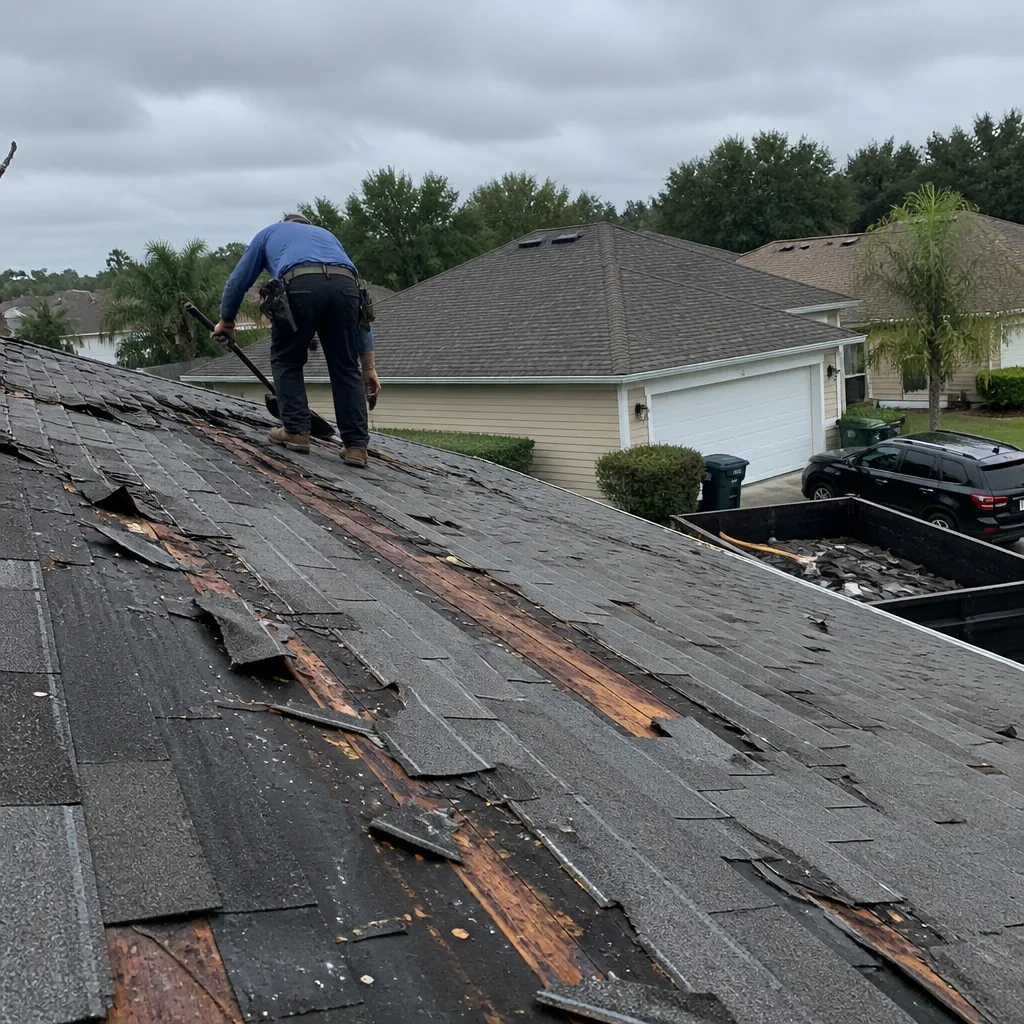 Before
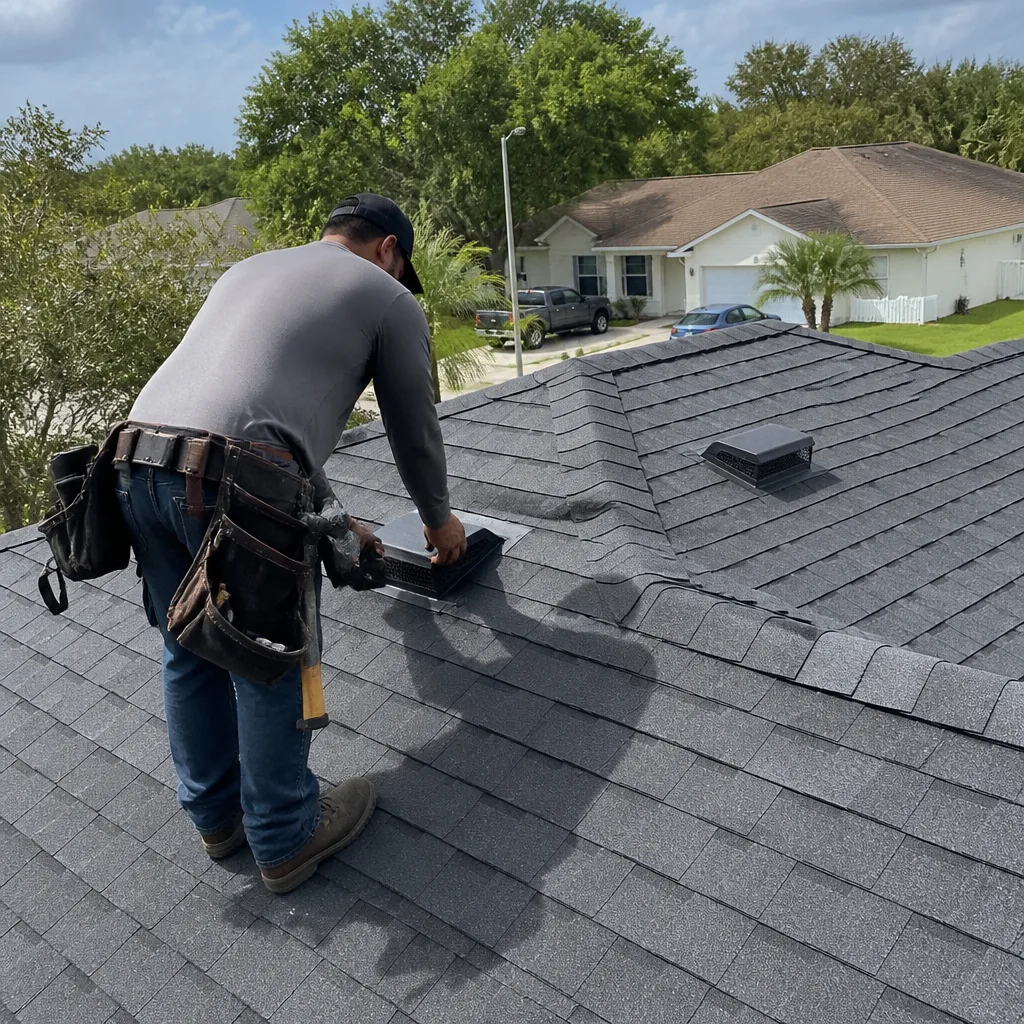 After
After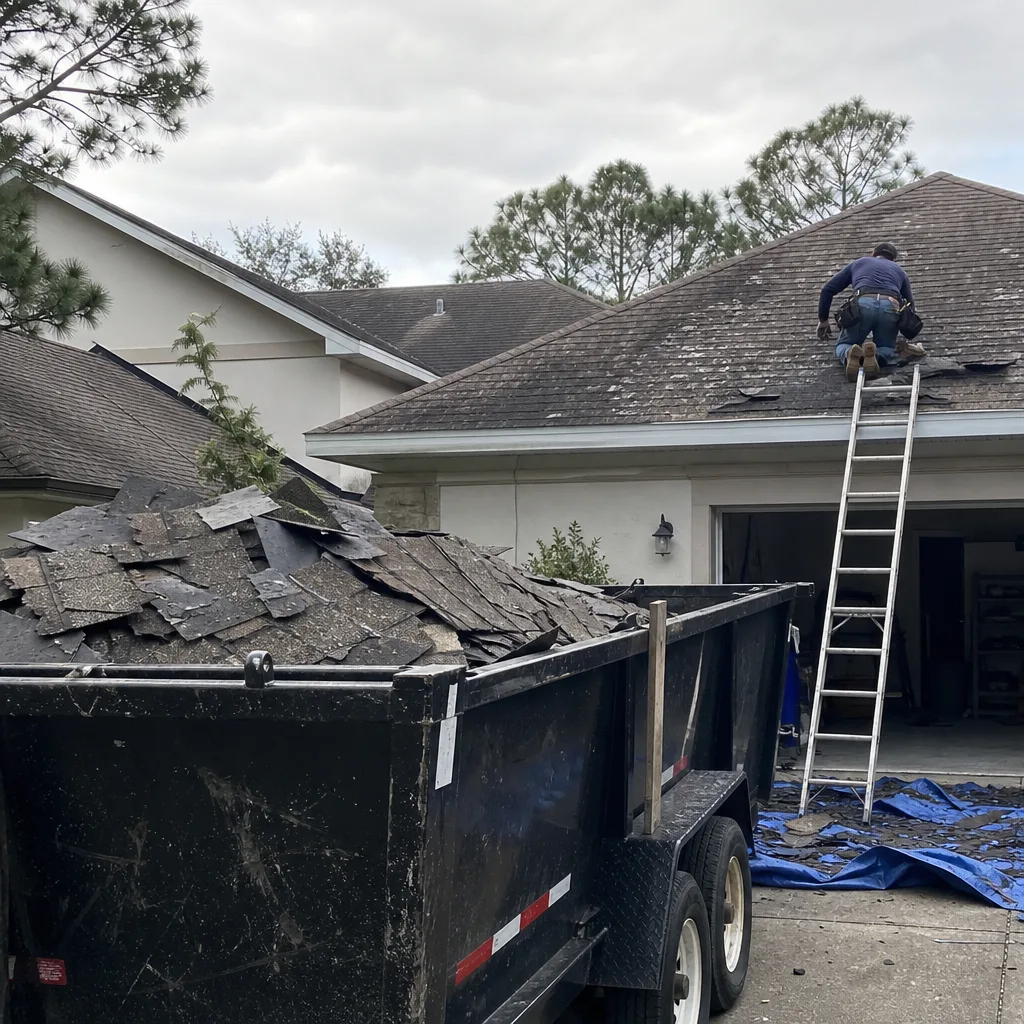 Before
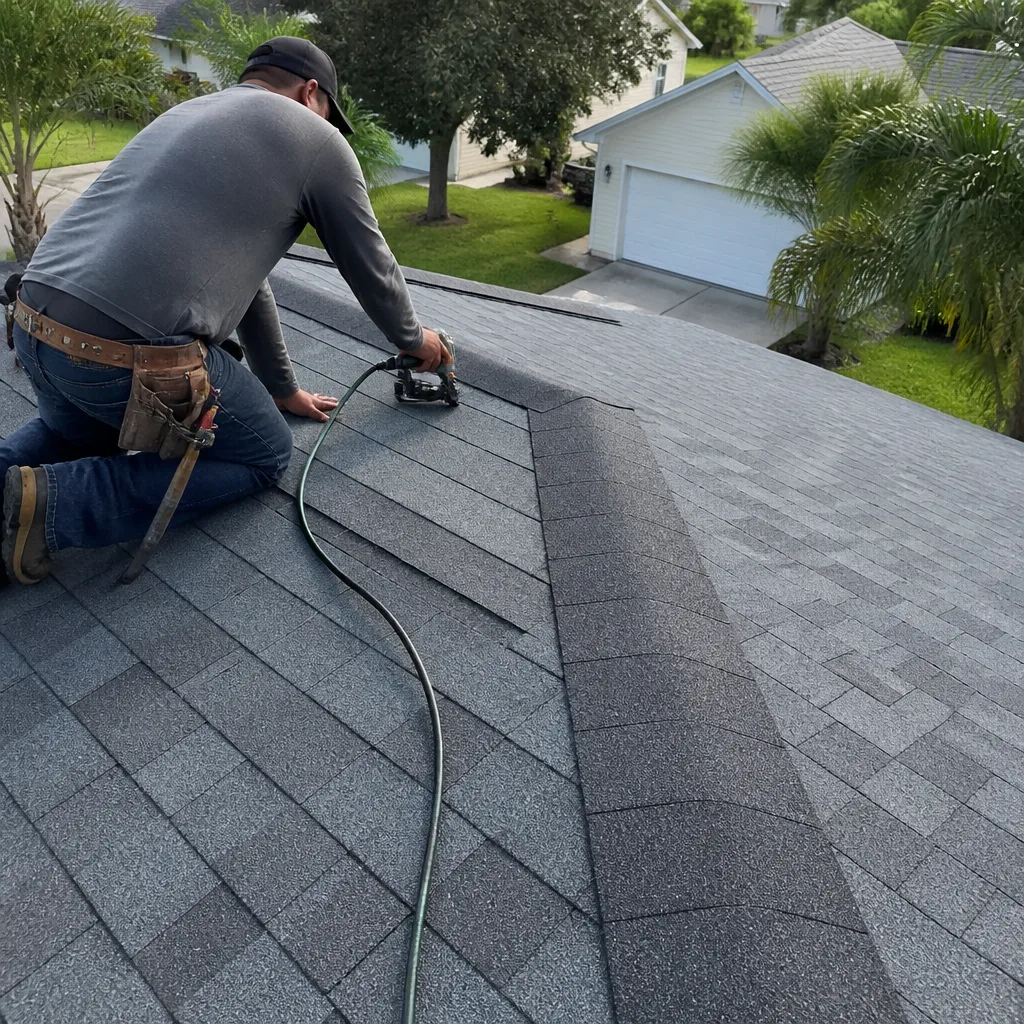 After
After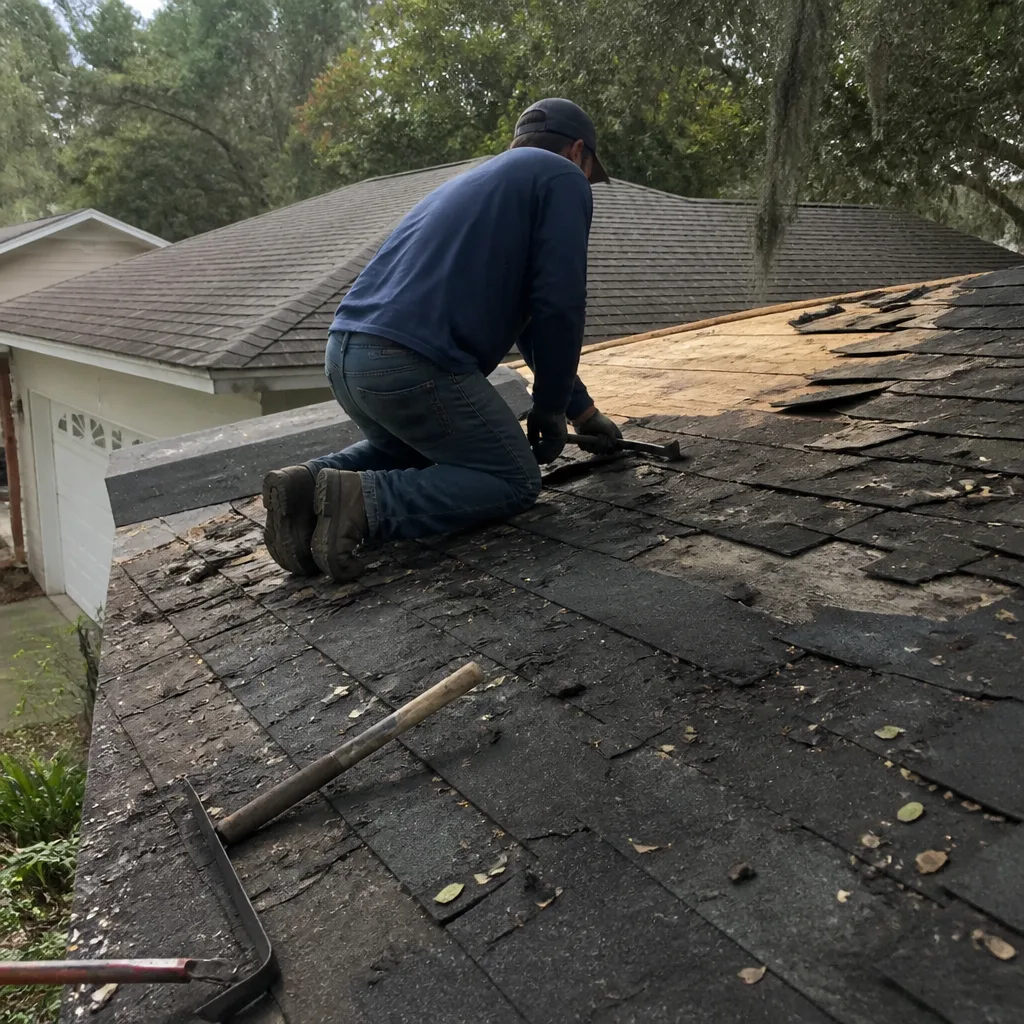 Before
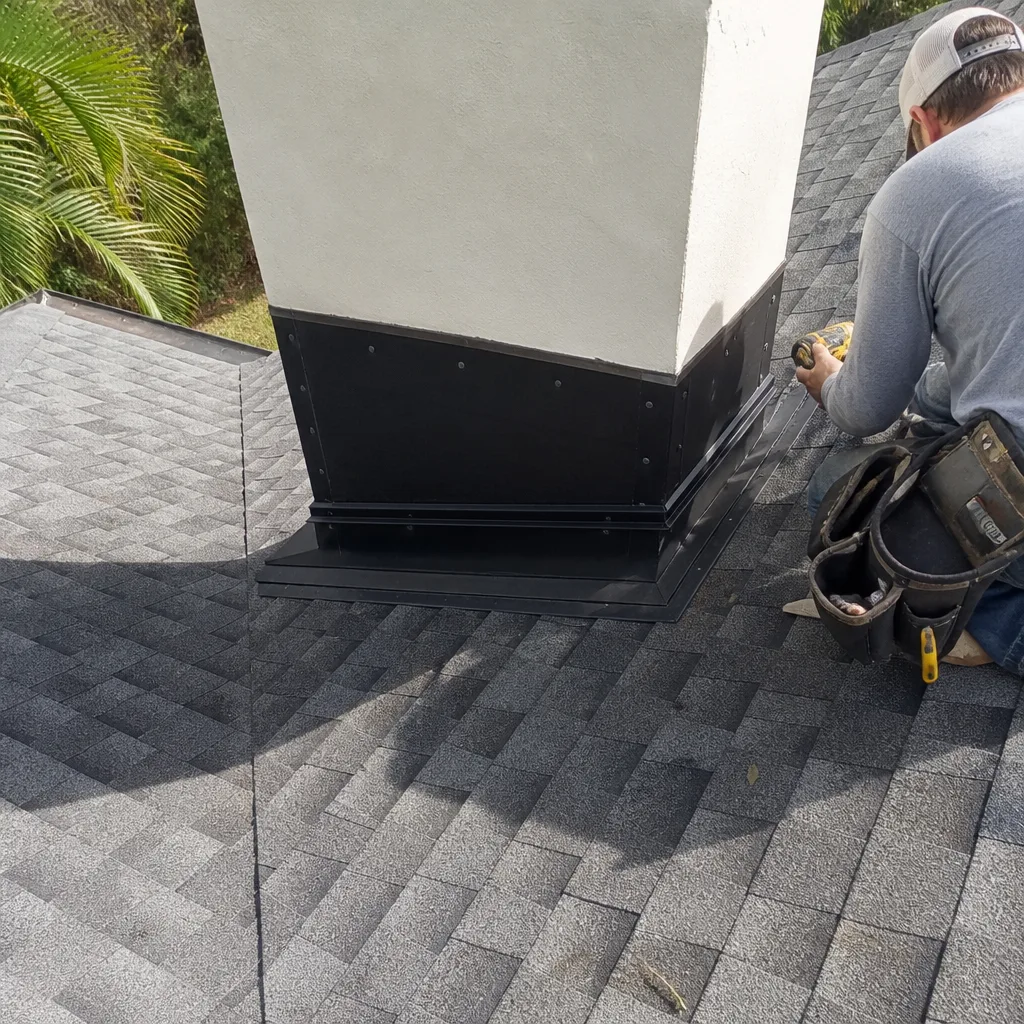 After
AfterWhen to Call a Professional
Some roofing issues are obvious: water coming through the ceiling, shingles in the yard after a storm, sunlight visible through the attic decking. But in Orlando, the less dramatic signs are the ones that cost you a full replacement if ignored. If you see curling shingle edges on the sun-facing slopes, dark streaks that don’t wash away, granules collecting in gutters, or a second floor that won’t cool below 80 in August, get a professional inspection. Our Roofing Company Maintenance Checklist for Orlando Homeowners covers what to look for between inspections. Roof work itself, especially anything involving decking, flashing, or structural connections, should never be DIY. A fall from an Orlando roof is life-altering, and a botched repair voids your insurance coverage. Tilehurst Roofing Orlando offers free estimates in Orlando, call (850) 303-7235. Greg Holloway and his crew will climb the roof, show you exactly what’s going on, and hand you a written price before any work starts.
Frequently Asked Questions
A full asphalt shingle roof replacement in Orlando typically runs $9,000 to $18,000 depending on square footage, roof complexity, and whether your pre-2004 home requires re-nailing and secondary barrier work under current Florida Building Code. Tile and metal run higher, with concrete tile starting around $25,000 for an average Orlando home. Call (850) 303-7235 for an exact quote, estimates are free.
An asphalt shingle roof in Orlando lasts 15 to 20 years on average, not the 25 to 30 years manufacturers advertise, because Central Florida’s UV intensity and thermal cycling age shingles faster than average U.S. conditions. With proper attic ventilation and light-colored architectural shingles, you can push toward 25 years. Concrete tile in Orlando lasts 40 to 50 years if the underlayment is replaced every 15 to 20 years.
Yes, Orange, Osceola, and Seminole counties all require a building permit for roof replacement, and most repairs involving decking or significant shingle sections require one too. Your contractor should pull the permit in their business name, and a final inspection is required to close it. Skipping the permit creates liability at sale time and prevents your insurance from covering an installation defect.
A pre-2004 Orlando home that needs permitted roof repair usually triggers a full replacement because the current Florida Building Code requires re-nailing the decking at 6-inch spacing and installing a secondary water barrier, and those requirements can’t be applied to just one section of an old roof without violating code continuity. This is county enforcement of post-2004 hurricane codes, not a contractor inflating the job. Call (850) 303-7235 and we’ll tell you what applies to your specific home.
For most Orlando homes, a light-colored architectural asphalt shingle from a manufacturer like GAF, CertainTeed, or Owens Corning offers the best balance of cost, UV resistance, and lifespan, especially when paired with proper soffit-to-ridge ventilation. Concrete tile from Boral lasts longest in Central Florida heat but requires structural evaluation because many older Orlando homes were not framed to carry the weight.
Most shingle warranties exclude “normal weathering,” which manufacturers define to include the granule loss and thermal cracking that Orlando’s sun routinely causes, so claims on heat-damaged shingles are frequently denied. Your practical protection is proper installation, ventilation, and a contractor who puts a written guarantee on their work, not a 50-year warranty document. Tilehurst Roofing’s written guarantee on every repair is delivered before the crew leaves, and it stays in force for a full year under the 365-Day Done Right Promise.
The Bottom Line
Roofing in Orlando is a set of decisions specific to this city, not “Florida roofing” in general. Your roof here is killed by heat, UV, and standing water, not just wind, so your money belongs in ventilation, light-colored architectural shingles, and proper water-shedding details. Your home’s construction year dictates whether repairs are even possible under the post-2004 building code. And the contractor you choose matters more than the shingle brand: a written price before work starts, a written guarantee at completion, and a live person on the phone around the clock are the minimum standard in a market where those things are not the norm. Tilehurst Roofing Orlando, a Kingswell family company founded in 2000, operates exactly that way, and Greg Holloway will put every number and every guarantee in writing before the first nail is driven.
Written by Greg Holloway, Owner at Tilehurst Roofing Orlando, serving Orlando since 2000.