
Last updated October 17, 2026
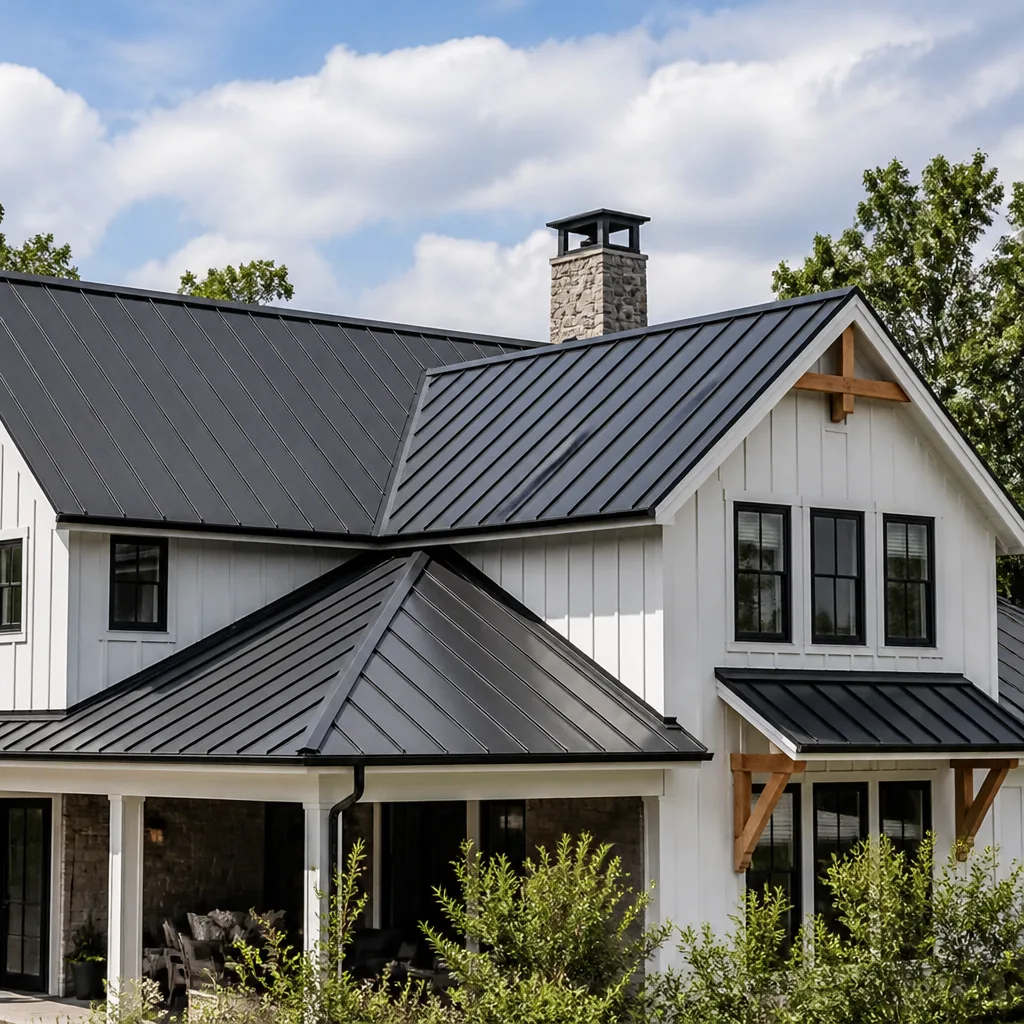 Metal roofing
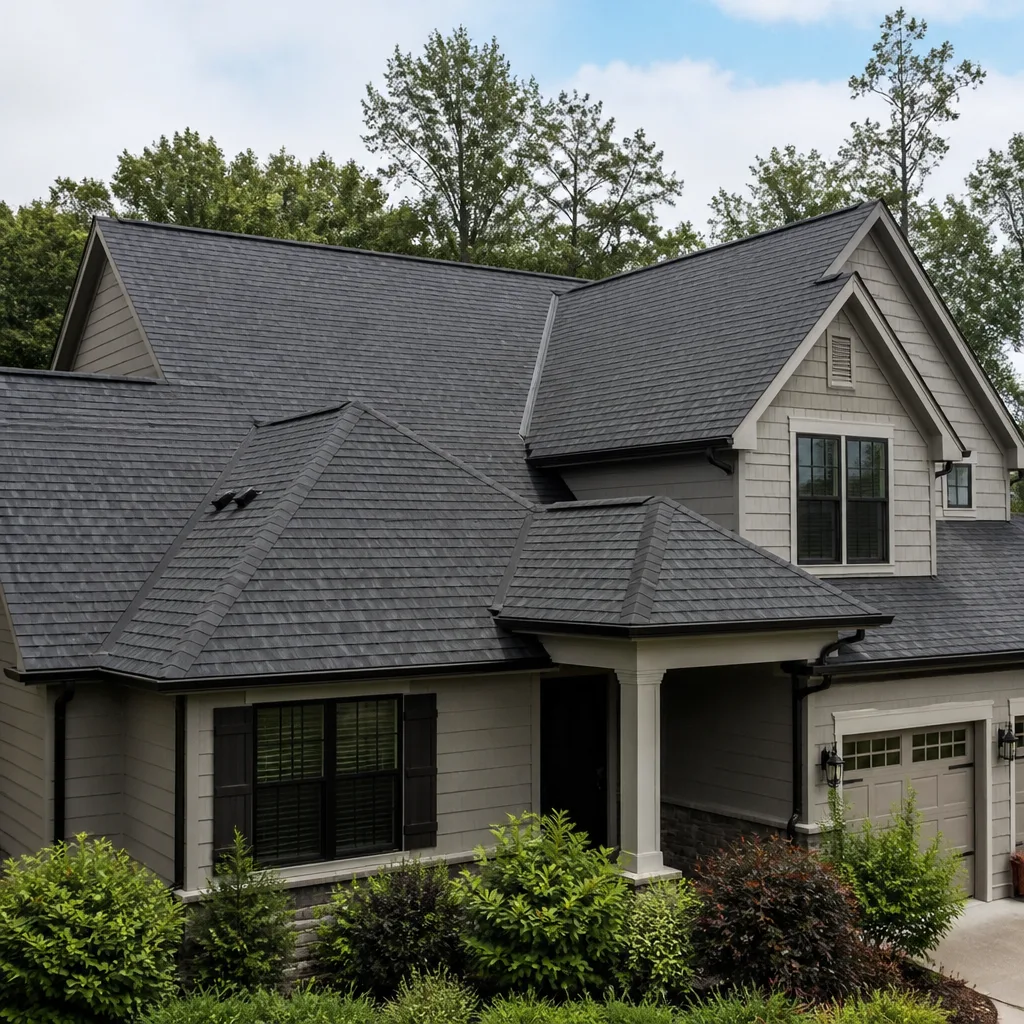 Architectural shingles
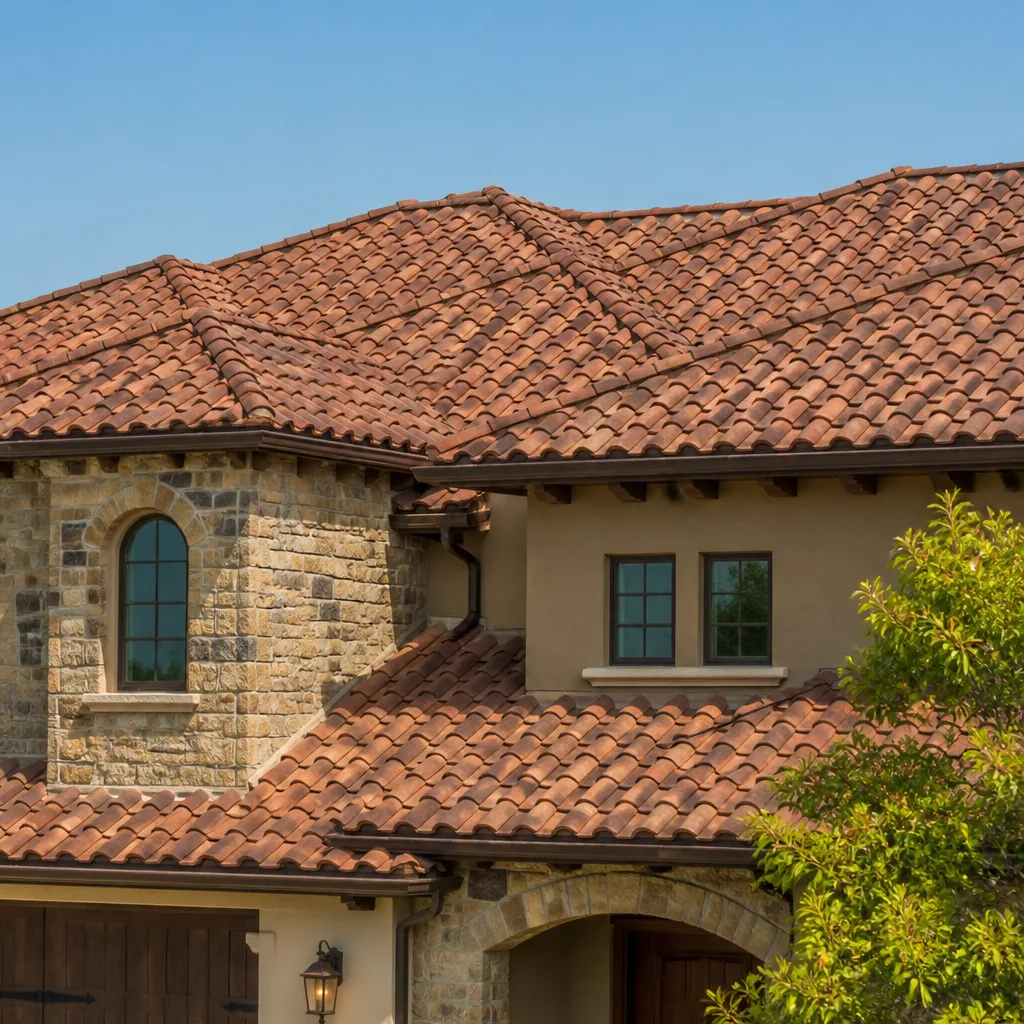 Tile roofing
 GAF
GAF Owens Corning
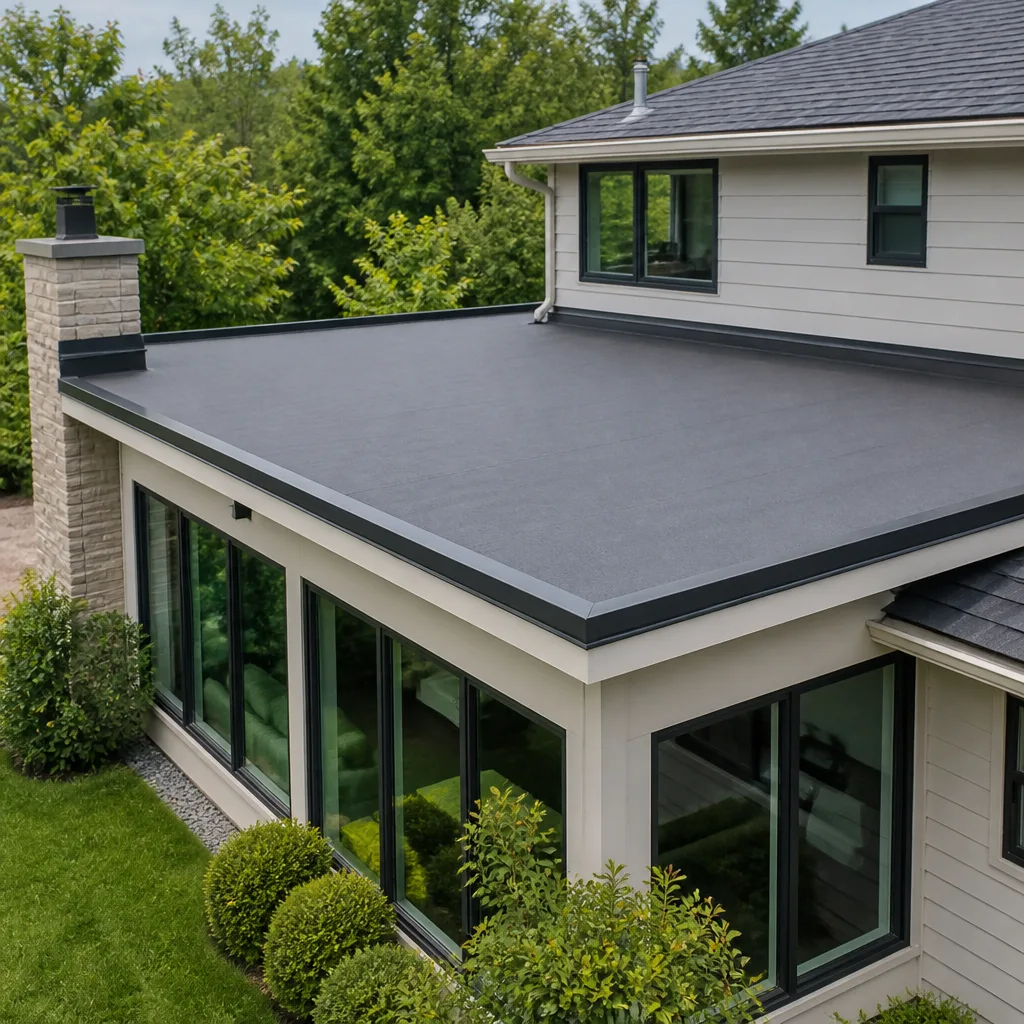 Flat & low-slope
Free roof inspection with deck photos before we talk money - GAF and Owens Corning certified installation
Roofing Warning Signs: A Orlando Homeowner’s Reference Guide
Most roofing guides wait until a roof is visibly failing before they show you what to look for. Missing shingles, sagging valleys, water pouring through the ceiling. By then, the structural damage is already done, and the conversation has shifted from repair to replacement. This guide is different. It’s built around the early indicators a roofer spots at year two or three of a problem, when a repair still costs less than a replacement and the damage hasn’t reached the decking yet. If you own a home in Orlando, where afternoon thunderstorms and relentless sun work your roof harder than nearly anywhere else in the country, knowing these early signs can save you thousands. We’ll walk you through what to check in your attic before you ever climb a ladder, what algae streaks in Orlando actually mean, and how to tell a cosmetic issue from a structural warning.
Quick Answer
The earliest roofing warning signs for Orlando homeowners show up inside the attic, not on the shingles: daylight gaps at roof penetrations, water staining on rafters, compressed or damp insulation, and moisture beading on nails. Outside, watch for granule accumulation in gutters, algae streaking that indicates the shingle’s UV shield is gone, and rust staining on fascia below chimneys or dormers. Any of these signs in an Orlando roof older than ten years warrants a professional inspection, which Roof Repair in Orlando teams can usually complete in under an hour.
Styles & brands we work with
Table of Contents
- Start in the Attic: The Four Signs That Appear Before Anything Outside
- Granule Loss in Orlando: The Downspout Test and What It Means
- Algae Streaking in Orlando: Cosmetic or Structural?
- Soft Spots on Walk-Decks: Deck Rot vs. Weak Sheathing
- Flashing Failure You Can See From the Ground
- Cosmetic, Maintenance, or Structural: The Three Repair Categories
- Common Mistakes to Avoid
- When to Call a Professional
Start in the Attic: The Four Signs That Appear Before Anything Outside
The outside of your roof is designed to take a beating. The inside is where the truth shows up first. Before you climb a ladder in Orlando’s summer heat, go into your attic on a bright afternoon and turn off the lights. Let your eyes adjust, then look up. You’re checking for four specific things that appear months or years before any exterior shingle damage becomes obvious.
1. Daylight Gaps
Any sliver of daylight coming through the roof deck is a problem. The most common spots are around plumbing vent pipes, the chimney chase, and anywhere a cable or satellite mount was screwed through the decking. In Orlando homes built before the 2002 Florida Building Code revisions, these penetrations were often sealed with basic caulk that fails within five to seven years under UV exposure and thermal cycling. If you can see light, water can get in, full stop. Even a pinhole gap lets in enough moisture during one Orlando summer thunderstorm to start rotting the decking around it.
2. Staining Patterns
Water stains on the underside of the roof decking or on rafters tell a story. A single dark ring around a nail means condensation, usually from inadequate attic ventilation and an Orlando summer’s worth of humidity. A long, dark, tapered stain running down a rafter means active water intrusion, and the source is almost always a leak at a penetration, a failed piece of flashing, or a shingle seal that’s let go. The shape and location of the stain will tell your roofer where to look on the exterior, which is why we always ask homeowners to photograph these patterns before we arrive.
3. Insulation Compression
Insulation that’s been wet and dried repeatedly loses its loft and compresses. In an Orlando attic, where R-30 to R-38 blown fiberglass is standard, you’re looking for areas where the insulation looks thinner, darker, or matted down. Wet insulation compresses against the drywall below it, reducing its R-value and trapping moisture against the ceiling. That moisture becomes a breeding ground for mold, and it’s often the first visible sign in the living space below: a faint musty smell or a yellowish ceiling stain that comes and goes with the rain.
4. Rafter Moisture
In the humid Orlando climate, rafter moisture shows up as dark, damp patches, especially in the morning before the attic heats up. Run your hand along the rafters near the eaves. If they feel cool and damp to the touch, you have a ventilation problem at minimum, and a leak at worst. Exposed nail points along the roof deck are another indicator: if the nails have visible rust or there’s a dark ring of moisture around each one, condensation is collecting inside the attic and the nails are sweating. This isn’t just a roofing concern; it’s a long-term structural concern as the nails gradually lose their grip on the decking.
Granule Loss in Orlando: The Downspout Test and What It Means
Here’s the counterintuitive truth about asphalt shingles: the granules aren’t the shingle. They’re the shingle’s UV shield. The actual waterproofing comes from the asphalt layer underneath, which breaks down rapidly once exposed to direct sunlight. Granules are made of crushed stone coated with ceramic, and they absorb the UV radiation that would otherwise cook the asphalt into brittleness. When granules release and wash down your gutters, your shingle’s armor is leaving in pieces.
The Downspout Test
After the next Orlando rainstorm, walk around your house and check the elbows at the bottom of your downspouts, or the splash blocks if you have them. Scoop up whatever’s collected there. A few tablespoons of granules is normal for a roof under five years old. If you’re pulling out half a cup or more from multiple downspouts, your shingles have lost a meaningful percentage of their protective layer. This is the point where repair costs are still manageable, because the underlying asphalt may not be severely degraded yet.
Why Orlando Roofs Lose Granules Faster
Orlando sits in the crosshairs of the harshest roofing environment in the continental U.S.: daily UV index ratings of 10+ from May through September, then the afternoon thunderstorms that thermally shock the shingles. The cycle works like this: the roof surface heats to 150-170 degrees Fahrenheit on a summer afternoon, then a thunderstorm drops an inch of rain that’s 70 degrees cooler in twenty minutes. That rapid contraction stresses the granule bond on every shingle, every day. We see Orlando roofs that lose five years of granule life in a three-year span compared to roofs further north, because the thermal cycling is more extreme and more frequent. Roofs in neighborhoods like College Park and Audubon Park, with their mature tree canopies and slower drying, get the additional factor of debris sitting on the shingles and holding moisture against the granule surface.
What Repairs Look Like at This Stage
When granule loss is caught before bald spots form, the fix is often targeted rather than comprehensive. Individual shingles or small sections can be replaced, underlayment can be checked and patched, and the roof gets additional years of service. The key is catching it before the asphalt itself starts to crack. Granule loss that’s visible as color streaking from the ground means the process has been underway for at least two years. The attic signs in the previous section will usually confirm it.
Algae Streaking in Orlando: Cosmetic or Structural?
Algae stains are the most common roof complaint in Orlando, and also the most misunderstood. The black or dark green streaks running down roof slopes, especially on north-facing planes and under tree canopy, are almost always Gloeocapsa magma, a cyanobacterium that feeds on the limestone filler in asphalt shingles. It’s endemic across the Southeast, and in Orlando’s high humidity, it thrives. Here’s what matters: algae itself doesn’t destroy shingles. But it’s a reliable marker of granule loss, and granule loss is structural.
Reading the Algae as a Warning
When algae colonizes an asphalt shingle, it grows in and around the granules. But the shingles most susceptible to algae are the ones that have already lost significant granule coverage, because more of the asphalt and limestone filler is exposed for the algae to feed on. A roof in Maitland or Winter Park with heavy algae streaking at ten years old is almost certainly showing those streaks because the granule layer is substantially depleted. The algae didn’t cause the granule loss. It’s following the granule loss, and the granules were already leaving because of UV breakdown and thermal cycling.
Distinguishing Algae Streaks From Substrate Damage
You can tell the difference from the ground if you know what to look for:
- Algae streaking follows the water path. It runs vertically down the roof slope, it’s darker at the top and fades toward the eaves, and it’s concentrated on shaded areas. The shingle surface is still flat and intact where you can see it.
- Substrate damage looks different. The shingles are curled at the edges, the surface looks pitted or cracked, and you may see exposed asphalt patches that appear shiny or sticky in direct sun. Substrate damage means the shingle’s waterproofing layer is compromised, and the repair is no longer optional.
Our Tilehurst Roofing Orlando home page explains our no-hassle inspection process – we’ll tell you which category your algae-streaked roof falls into, and we’ll put the answer in writing before any work is discussed.
Soft Spots on Walk-Decks: Deck Rot vs. Weak Sheathing
If your Orlando home has a flat walk-deck, a second-story terrace, or a low-slope section covered with a membrane roof, you may have felt a spot that gives slightly underfoot. There are two very different interpretations, and getting them confused costs money.
The Two Possibilities
A weak sheathing panel is a localized flex in the plywood or OSB decking. It feels springy underfoot but rebounds when you step off. It’s usually the result of a single area of moisture exposure, and the fix often involves replacing one sheet of decking. This is a repair, not a roof replacement.
Deck rot feels different. It feels soft, almost spongy, and it doesn’t rebound. You may hear a faint crunching or squishing sound. The wood fibers have broken down from sustained moisture, and the structural integrity is compromised. On a walk-deck, where people are standing and walking, this is a safety issue. Deck rot under a membrane roof almost always requires removing the membrane, replacing the rotted decking, and re-covering the area.
Why Orlando Makes This Worse
Orlando’s combination of daily summer rain and high humidity means a small membrane puncture gets wet frequently. A pinhole leak that sees rain only occasionally in a drier climate becomes a persistent moisture source here. On flat walk-decks, the membrane is the only line of defense, and any puncture, failed seam, or dried-out flashing detail means water enters the decking and stays. Flat surfaces don’t drain as quickly as slopes, and Orlando’s afternoon downpours can put standing water on a membrane for hours at a time. If you’re feeling soft spots on your walk-deck, the correct move is to have it inspected before the rainy season hits full force. Membrane repairs on flat decks are straightforward when caught early; replacing rotted decking is a much different conversation.
Flashing Failure You Can See From the Ground
Flashing is the metal that directs water away from the joints and transitions on your roof: the chimney, dormers, skylights, vent pipes, and where the roof meets a vertical wall. When flashing fails, the leak is usually slow and persistent, and it shows up in specific, observable ways that you can check from the ground with a pair of binoculars or a camera with a good zoom.
Rust Staining on Fascia Below a Chimney
Look at the fascia board directly below your chimney. If you see rust-colored staining running down from the chimney area, the chimney flashing is deteriorating. The staining is actually dissolved metal from the flashing itself being carried down by water. In Orlando, where many masonry chimneys were built decades ago and have settled differently than the roof structure, the flashing at the chimney base is under persistent stress. The right fix is usually step flashing and counter-flashing replacement, not just caulk. Caulk on a chimney in Orlando’s climate fails within one to two seasons.
Separation Lines at Dormers
Dormer walls and the roof planes that meet them are classic leak points. From the ground, look for visible gaps or lifted areas at the transition line where the dormer wall meets the roof. In Orlando’s older neighborhoods like Thornton Park and Lake Eola Heights, where dormered bungalows are common, this transition has often been repaired multiple times over the decades. Each repair adds another layer, and each layer is a potential failure point. The separation line you’re looking for is subtle: a dark line or shadow where the flashing should sit flat against the wall and doesn’t.
Gutter Overflow at Specific Corners
If your gutters overflow only at specific corners, especially inside corners where two roof planes meet, look at the flashing detail above that corner. Inside corners concentrate water from two slopes into one channel, and if the flashing is undersized, improperly lapped, or deteriorated, water overwhelms the gutter at that point. In Orlando’s summer thunderstorms, which can drop an inch of rain in twenty minutes, an undersized valley or failing flashing at an inside corner shows up as a waterfall over the gutter at precisely that spot.
Each of these is a flashing issue, not a shingle issue, and flashing repairs are among the most cost-effective interventions in roofing. A properly done flashing replacement can add five to ten years to the serviceable life of an otherwise sound roof. The Roofing Company in Orlando page details how we price flashing work, but the short version is this: a written price before any work starts, every single time.
Cosmetic, Maintenance, or Structural: The Three Repair Categories
One of the most valuable things you can learn as a homeowner is how to ask a roofer which category your repair falls into, because the answer tells you whether you’re dealing with a professional or a salesperson. At Tilehurst Roofing Orlando, we use three clear categories, and we tell every homeowner which one they’re in before we quote a price.
Category One: Cosmetic
A cosmetic repair addresses appearance without touching function. Algae cleaning, light granule loss on a young roof, and minor surface discoloration all fall here. These are optional. They don’t extend the life of the roof, they don’t prevent leaks, and they can wait. A roofer who tells you a cosmetic issue is urgent is either inexperienced or trying to create urgency that doesn’t exist.
Category Two: Maintenance Repair
A maintenance repair prevents a problem from becoming a structural one. This includes: replacing a few shingles with excessive granule loss, resealing a pipe boot that’s showing early cracking, replacing flashing that’s beginning to lift but hasn’t leaked, and clearing debris from valleys before the rainy season. Maintenance repairs are where you get the most value per dollar. In Orlando, a maintenance repair done in March saves you from an emergency call in July, as we explain in our Seasonal Roofing Care for Orlando: Year-Round Homeowner’s Guide. This is the category where most homeowners should be, because the early signs in this guide are designed to catch problems here.
Category Three: Structural Warning
A structural warning means the waterproofing layer has failed or the decking is compromised. Active leaks, daylight gaps in the attic, deck rot under a membrane, and widespread shingle seal failure with exposed decking all fall into this category. These cannot wait. In Orlando, where the daily summer rain cycle means a small leak gets wet every afternoon for months, structural warnings become structural damage quickly. If your roofer puts you in this category, ask them to show you the evidence and explain what they’re seeing-our DIY vs Professional Roofing: The Orlando Homeowner’s Decision Guide can help you evaluate their answers. A good roofer will walk you through the exact location, show you photos, and give you a written explanation before you approve any work. If they won’t, get a second opinion.
How to Ask the Question
When you have a contractor on the roof or at the inspection, ask this directly: “Which category does this fall into, cosmetic, maintenance, or structural, and how long can it safely wait?” The answer tells you almost everything you need to know. If they can’t give you a straight answer, that’s a warning sign about the contractor, not the roof. Our job at Tilehurst Roofing Orlando is to make sure you know the category before you spend a dollar, which is why the written price and written guarantee are standard practice on every job, not a premium option.
Common Mistakes to Avoid
- Ignoring attic signs because the roof “looks fine from the street.” In Orlando, a roof can look perfectly intact from the ground while the decking underneath is actively rotting. The attic is where the truth lives, and it costs nothing to look.
- Power-washing algae off your shingles. This doesn’t just remove the algae; it strips granules and accelerates the exact degradation you’re trying to address. Professional soft-wash treatments exist, but pressure washing an asphalt roof in Orlando’s sun is a fast way to turn a cosmetic issue into a structural one.
- Caulking flashing gaps instead of replacing the flashing. Caulk is a temporary fix that fails quickly under Orlando’s thermal cycling. Proper flashing replacement is more expensive up front and far cheaper over three years.
- Waiting until a leak appears to schedule an inspection. By the time water shows up on your ceiling, the leak has been active for weeks or months. The ceiling stain is the last symptom, not the first.
- Getting one estimate and choosing based on price alone. Roofing repair quotes vary widely because scopes vary widely. Ask each contractor which category the repair falls into, what’s included, and what the guarantee covers. A repair with no written guarantee isn’t a real repair.
- Assuming a roof under warranty means repairs are free. Most shingle manufacturer warranties cover the material, not the labor, and they don’t cover installation defects. Read the fine print before counting on that warranty.
- Working with a contractor who won’t show up in writing. If the price, the scope, and the guarantee aren’t on paper before work starts, you’re taking all the risk. That’s the whole point of a written price and a written guarantee, and any roofer who won’t provide them is telling you something important.
When to Call a Professional
Call a roofer when you see daylight gaps in the attic, active staining on rafters or decking, soft spots on walk-decks, or rust staining below a chimney. Call when the gutter elbows are collecting granules by the cup, when algae streaking appears on a roof that’s more than seven years old, or when you feel like you’re guessing instead of knowing. An inspection is inexpensive, usually free, and it gives you a baseline. From there, you can decide when a repair makes sense for your budget and your timeline. Tilehurst Roofing Orlando offers free estimates in Orlando – call (850) 303-7235 and a live person will answer, 24 hours a day, every day of the year. If you’re considering a roof that’s reached the end of its serviceable life, our Roof Replacement in Orlando page explains material options from GAF, Atlas, and Tamko, along with exactly how the pricing conversation works before you ever sign anything.
See the difference
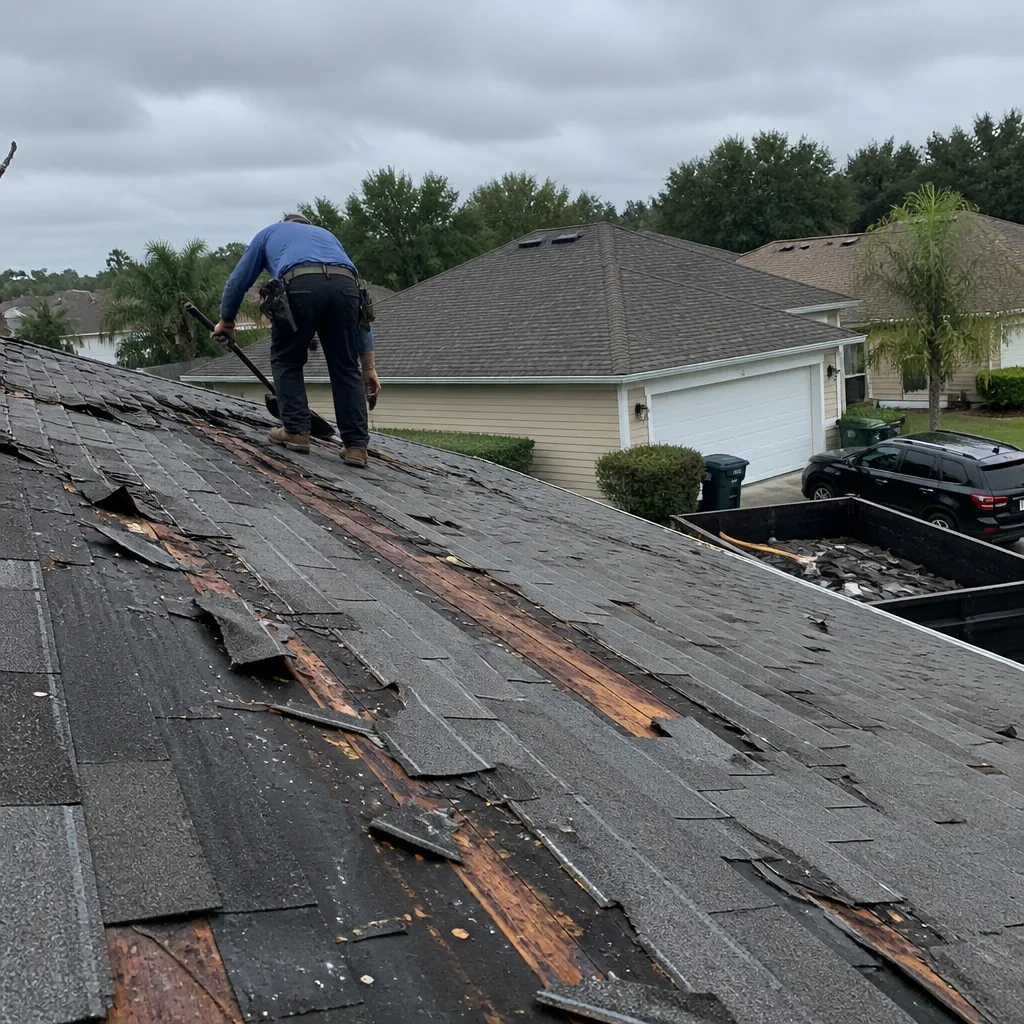 Before
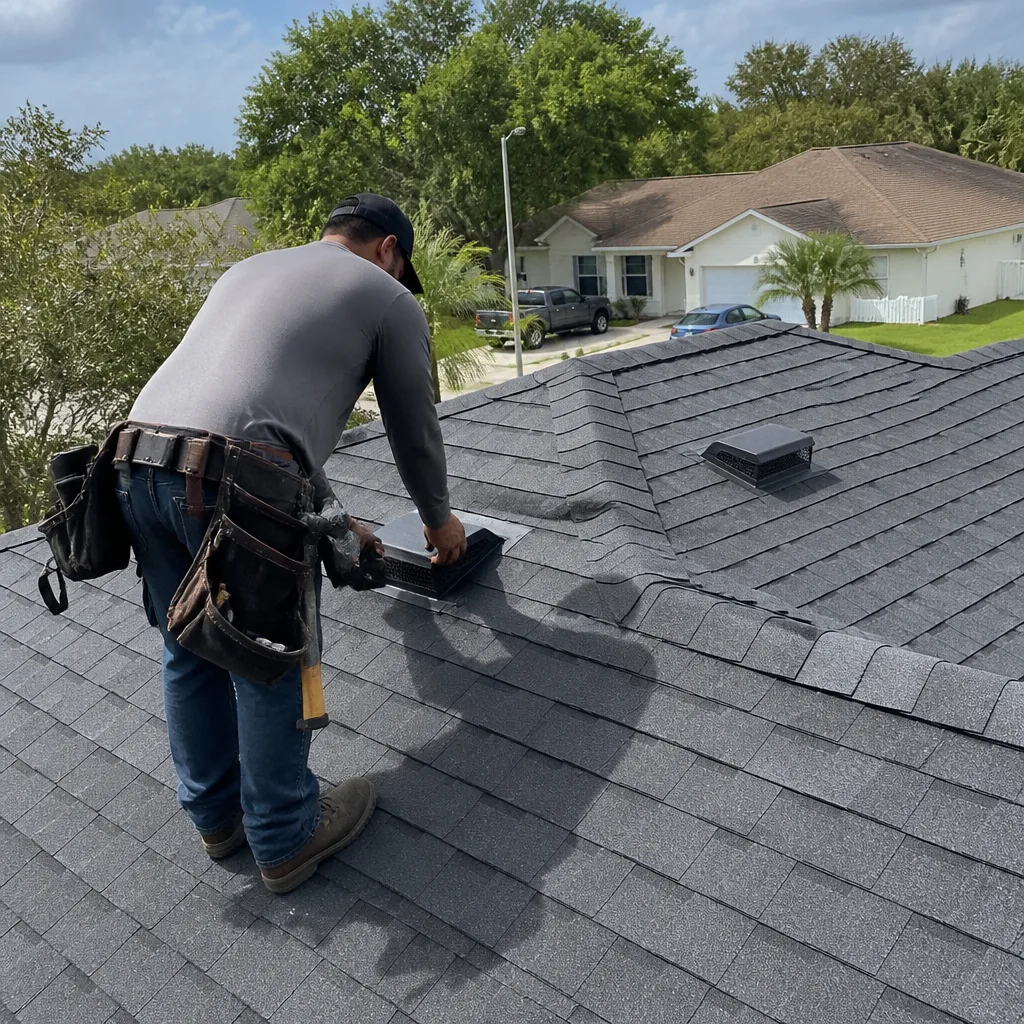 After
After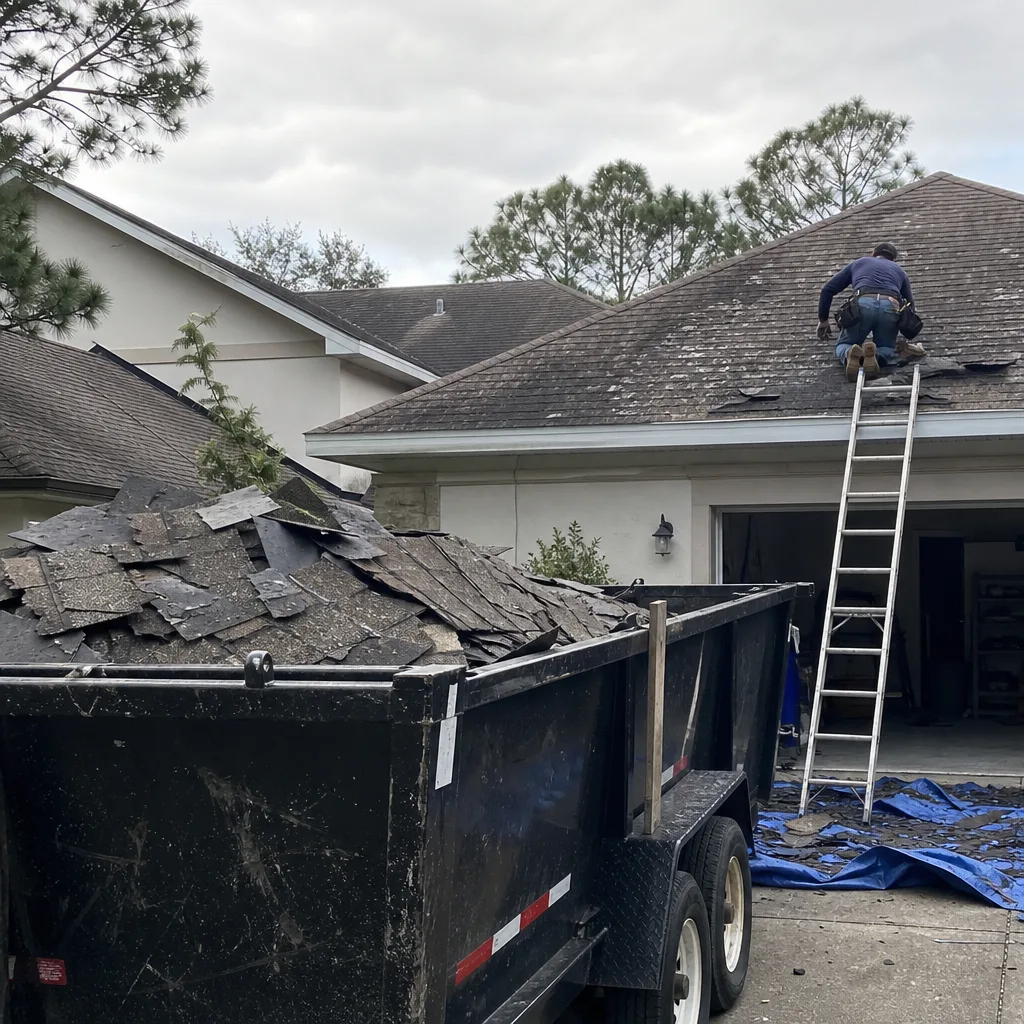 Before
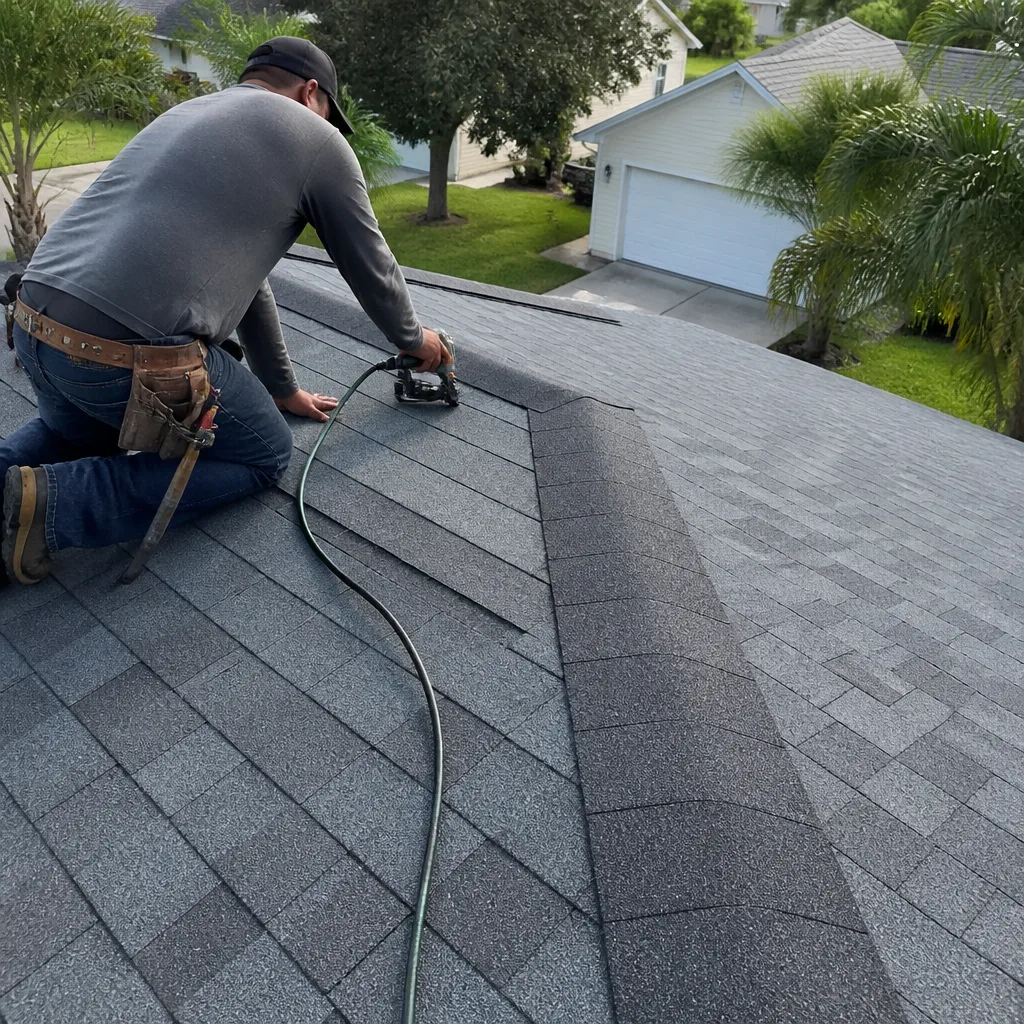 After
After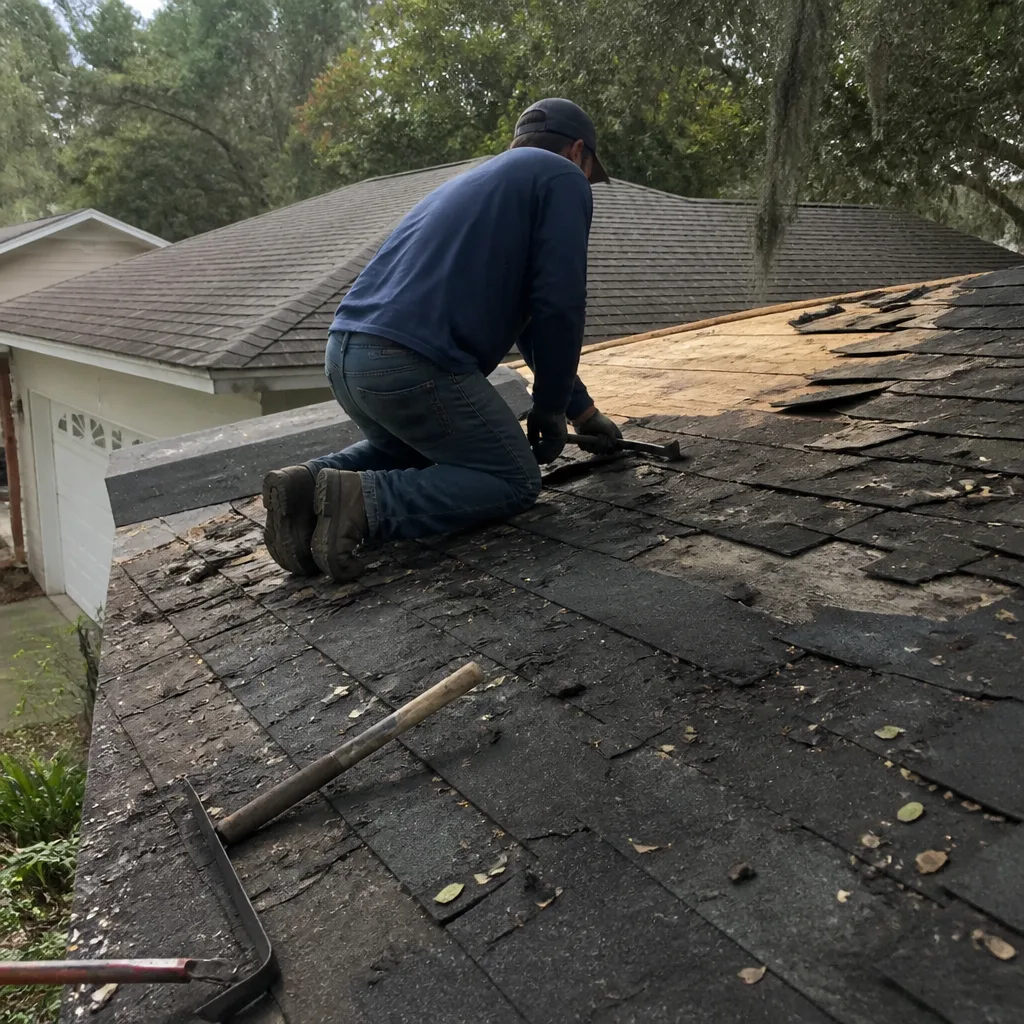 Before
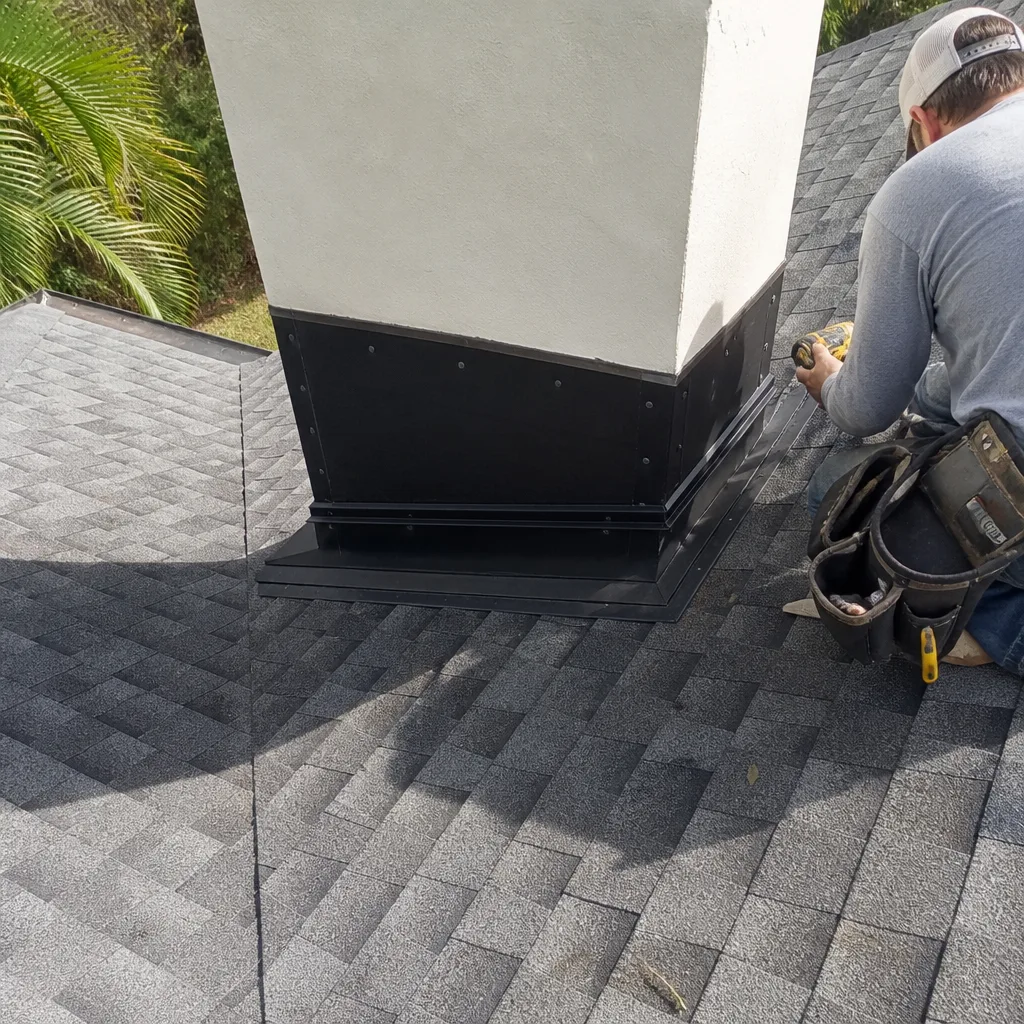 After
AfterFrequently Asked Questions
Minor repairs in Orlando typically run $250 to $600, flashing replacements run $400 to $1,200 depending on the detail, and decking repairs that require opening the roof run $800 to $2,500. These are Orlando market ranges for a Roof Repair in Orlando professional, not DIY material costs. Call (850) 303-7235 for an exact written quote on your specific repair – estimates are free and the price is in your hands before any work starts.
Most individual repairs are completed in a single day, including minor shingle replacement, flashing repair, and pipe boot replacement. The scheduling window in Orlando depends on the weather – summer afternoon storms can compress the work window into the morning hours, and we schedule around that reality. We’ll give you a specific arrival window and show up inside it.
Insurance covers repairs related to a covered peril, like wind damage from a named storm or falling tree. It typically doesn’t cover wear and tear, granule loss, or maintenance issues. If you’re filing a claim, get a written assessment from a licensed roofer first – in Orlando, documentation of the specific damage and its cause makes the claims process faster and harder to deny.
The early signs are granule accumulation in downspouts, algae streaking on a roof older than seven years, daylight gaps visible in the attic, soft spots on flat walk-decks, and rust staining on fascia below chimneys. None of these require a ladder to spot. All of them show up before water enters the living space. Call (850) 303-7235 for a free inspection if you’re seeing any of them.
Algae itself doesn’t damage shingles, but it’s a reliable indicator of granule loss, and granule loss is the actual problem. In Orlando’s high-UV, high-humidity climate, heavy algae streaking on a roof older than seven years usually means the shingles’ protective granule layer is substantially depleted. That’s a maintenance repair or structural warning situation, not just a cosmetic one.
You know because it’s in writing. A written price before any work starts means the number doesn’t change unless the scope changes, and if the scope changes, you approve the change in writing before any additional work happens. That’s how Tilehurst Roofing Orlando operates on every job, and it’s the only honest way to price roof work. If a contractor won’t put the price in writing before starting, find a different contractor.
The Bottom Line
Your roof talks before it fails, but only if you’re listening in the right places. The attic shows daylight gaps, staining, and moisture before the shingles show anything. Your downspouts collect granules by the cup before the color change is obvious from the street. Algae streaking in Orlando means more than just a dirty roof; it’s a window into what’s happening to the shingle surface. And the three-category framework, cosmetic, maintenance, or structural, tells you exactly when to act and when to wait. Most homeowners catch problems in the maintenance stage, when repairs are affordable and straightforward, if they know what they’re looking at. This guide gives you that knowledge. When you’re ready for eyes on the roof, Tilehurst Roofing Orlando provides free estimates, written pricing before any work starts, and a written guarantee on every repair. Call (850) 303-7235 – a live person answers, 24/7.
Written by Greg Holloway, Owner at Tilehurst Roofing Orlando, serving Orlando since 2000.