
Last updated October 17, 2026
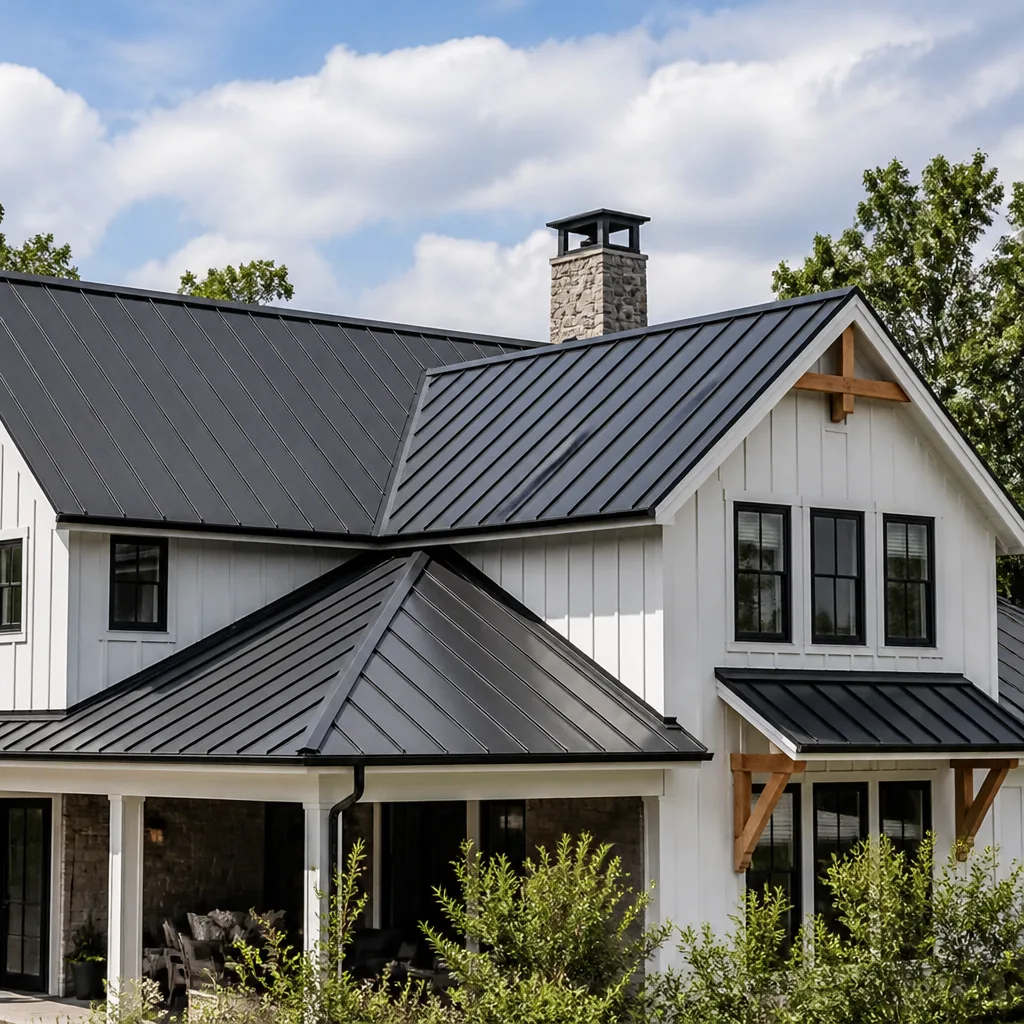 Metal roofing
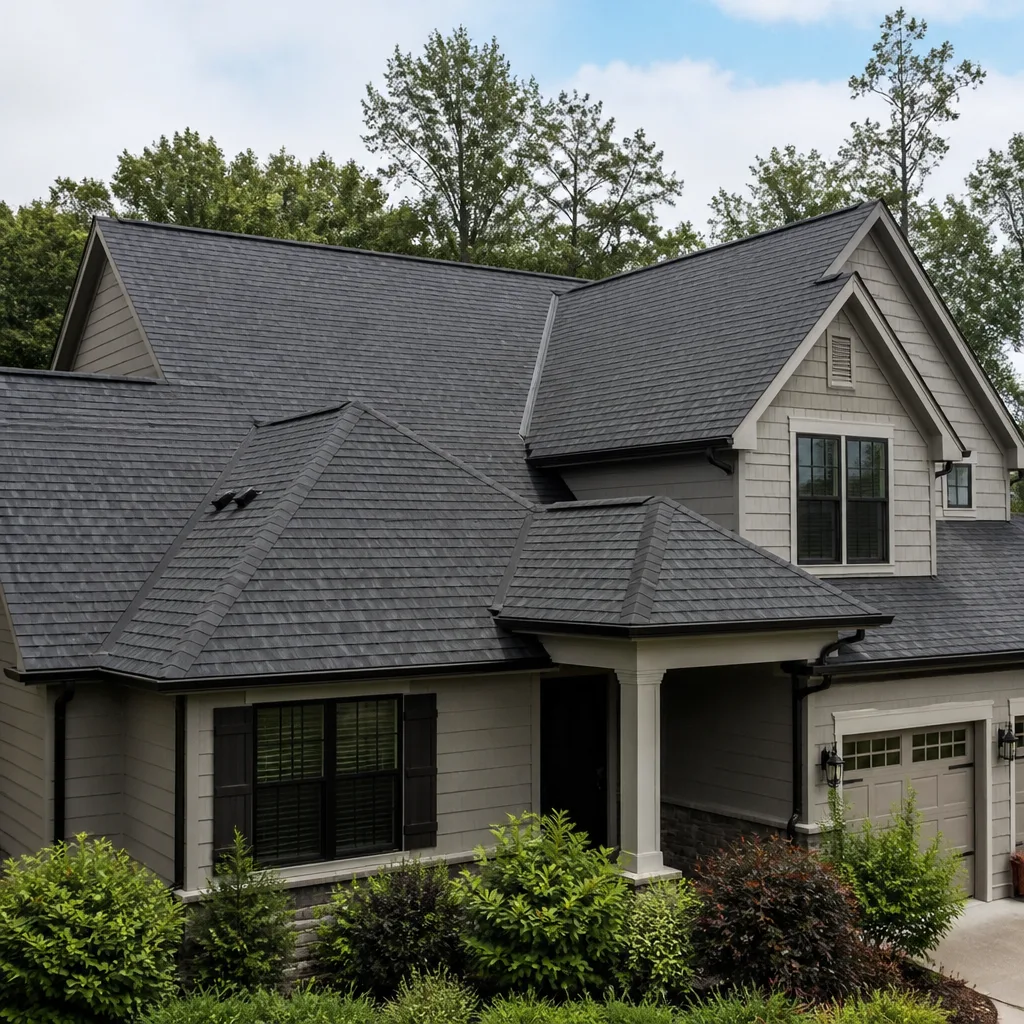 Architectural shingles
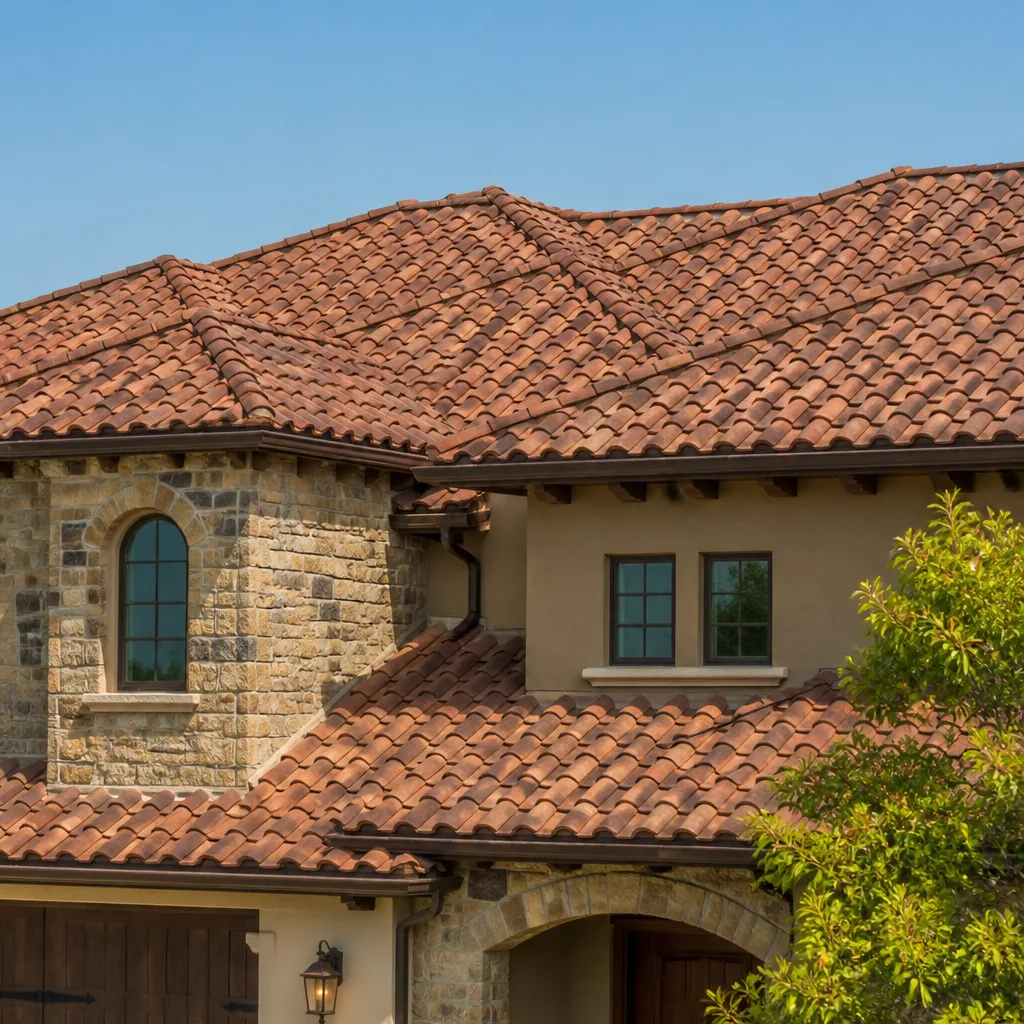 Tile roofing
 GAF
GAF Owens Corning
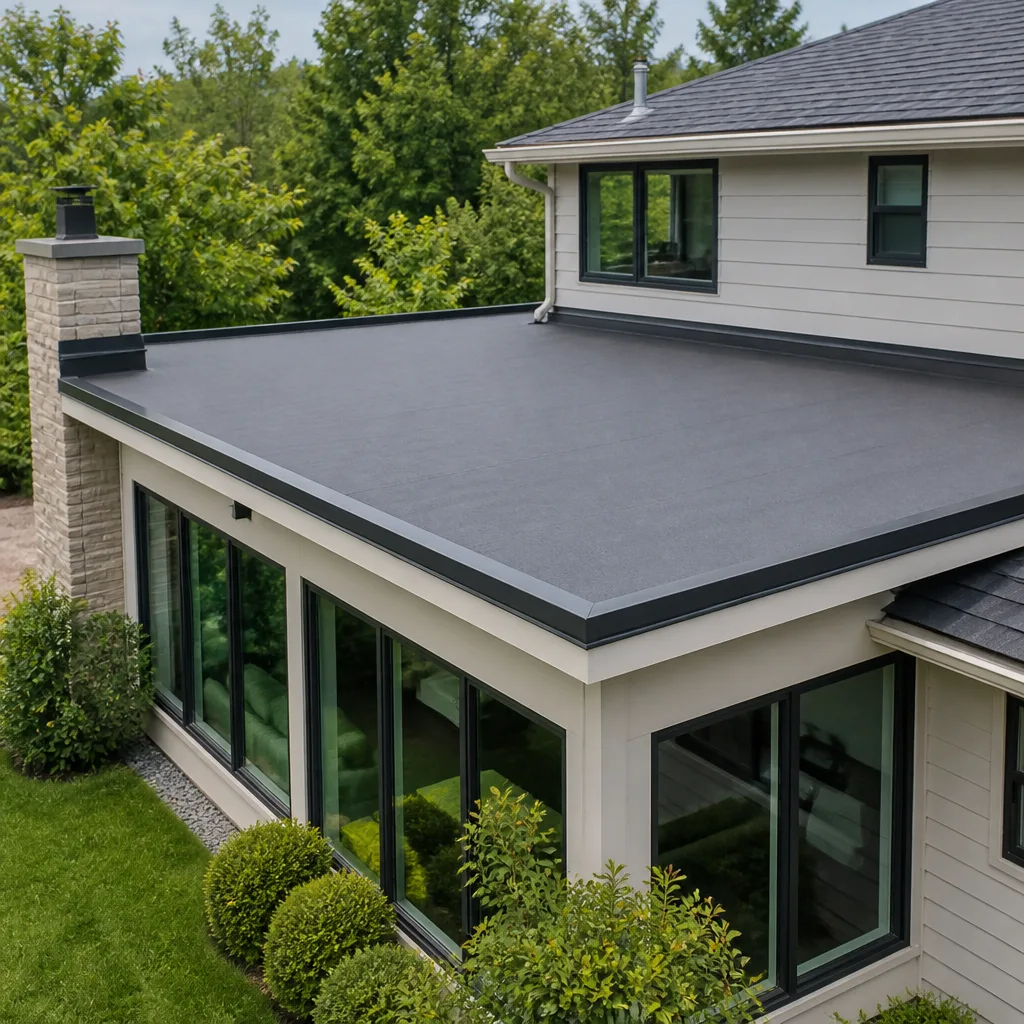 Flat & low-slope
Free roof inspection with deck photos before we talk money - GAF and Owens Corning certified installation
Roofing Permits, Codes & Inspections in FL: What You Need to Know
In Florida, a roofing permit is not the bureaucratic hurdle most homeowners think it is. It is the legal trigger that forces a county or city inspector to climb onto your roof deck and verify that the fastening pattern, underlayment, and flashing actually meet the wind-load standards written into the Florida Building Code. Skip the permit in Orlando, and you have not saved yourself $400. You have handed your insurance company a documented reason to deny a future wind-damage claim. This guide walks through what the permit process actually does for you, what inspectors look for at each stage, what the 25% rule really means, and why permitted work shows up as a clean line item on your property record when you sell the house. For a broader overview, see The Complete Guide to Roofing in Orlando.
Styles & brands we work with
Quick Answer
Most residential roof replacements and repairs in Florida require a building permit before any work begins, followed by at least two inspections: a dry-in inspection after the underlayment is fastened and a final inspection after the roof covering is installed. The permit triggers mandatory verification that your roof deck and fastening pattern meet the Florida Building Code wind-speed requirements for your county, including Orlando’s 140 mph design standard. A roof installed without a permit can legally void an insurance claim, stall a home sale, and create a code-compliance liability that follows the property. Homeowners should also review Roofing Warning Signs: A Orlando Homeowner’s Reference Guide to catch problems early.
Table of Contents
- Why Florida Roofing Permits Exist: The Hurricane Code Legacy
- The 25% Rule in Practice: Repair vs. Code-Compliance Upgrade
- What the Florida Building Code Requires in Orlando: 140 mph Wind Standards
- The Three Inspections Every Orlando Roof Requires
- Who Pulls the Permit: Homeowner vs. Contractor Liability
- How Permitted Work Appears on Your Property Record and Why It Matters
- What Permits and Inspections Actually Cost in Orange County
- How Long the Permit and Inspection Process Takes
- Common Mistakes to Avoid
- When to Call a Professional
- Frequently Asked Questions
- The Bottom Line
Why Florida Roofing Permits Exist: The Hurricane Code Legacy
Florida did not always require the level of roof documentation it does today. Three hurricanes changed that. Hurricane Andrew in 1992, followed by the 2004 and 2005 storm seasons, produced thousands of roof failures that engineers traced to the same root causes: improperly fastened decking, weak nail patterns, and underlayment that peeled off in sheets once the roof covering lifted. The state legislature responded by rewriting the building code in 2002, then again in 2004, and again in 2007. Each rewrite added structural requirements that directly address what failed in the field.
What this means for an Orlando homeowner is specific: the permit process exists to create a paper trail proving the roof was built or repaired to the current code, not the code that was in effect when the house was originally constructed. Inspectors are not checking whether the shingles look straight. They are checking whether the nails are long enough, spaced correctly, and driven through the right part of the shingle, because that is what determines whether a 140 mph gust tears your roof off or your roof shrugs and holds.
We have seen the difference in Orange County neighborhoods where homes predate the 2002 code. A roof that has never been permitted since construction often has decking nailed with 6d nails spaced six inches apart along the panel edges but not in the field. Current code requires 8d ring-shank nails at six-inch spacing along edges and twelve-inch spacing in the field across the entire deck. That single difference, visible only when the old roof is stripped, is the reason the permit and its inspections exist. The inspector verifies what the homeowner cannot see from the driveway.
The Kingswell Way of roofing, which is how we operate Tilehurst Roofing Orlando, treats the permit not as a tax but as the homeowner’s strongest protection. It is the only part of a roofing job that a third party with legal authority validates.
The 25% Rule in Practice: Repair vs. Code-Compliance Upgrade
The most misunderstood part of Florida roofing law is the 25% rule. Here is the plain-language version: if more than 25% of the total roof area is being replaced, repaired, or recovered within any 12-month period, the entire roof must be brought up to current Florida Building Code compliance. Not just the section being worked on. The whole roof.
This rule catches homeowners off guard because it means a “simple” repair can legally trigger a full code-compliance upgrade. Say a branch punctures a 400-square-foot section of an 1,100-square-foot roof. That is 36% of the roof area. Under Florida Administrative Code Chapter 9B-3.047, the roofing contractor cannot simply patch the damaged area and call it done. The repair must extend to the entire roof, and the result must meet the wind-load, fastener, and underlayment standards currently in the code.
In practice, this often means:
- The existing roof covering is stripped to the deck so the inspector can see the fastening pattern of the decking itself.
- The nail pattern is upgraded to the current standard if the decking fastening is insufficient, which it often is on homes built before 2002.
- New underlayment is installed to the current secondary water barrier standard: one layer of ASTM D226 Type II felt or a synthetic equivalent, fully adhered or fastened per code.
- The entire roof receives new covering material, not just the damaged section, so the roof functions as one continuous system.
The 25% rule is not a money grab by permitting departments. It exists because engineers found that partial roof repairs on older homes created weak seams where new material met old, and those seams failed first in high wind. By requiring the whole roof to meet one standard, the code removes the seam. The result is a roof replacement in Orlando that behaves as a single system rather than a patchwork.
Homeowners who try to avoid the 25% rule by splitting repairs across multiple years are playing a game with their insurance. If a wind event damages the roof, the insurer’s adjuster will look at permit history. Two unpermitted repairs in consecutive years totaling more than 25% of the roof area gives the insurer grounds to argue the roof was not code-compliant, and therefore the damage claim is reduced or denied.
What the Florida Building Code Requires in Orlando: 140 mph Wind Standards
Orlando sits in a wind zone with a 140 mph design standard for residential roof systems under the 2023 Florida Building Code, 8th Edition. That number is not arbitrary. It is the wind speed a roof must be engineered to withstand for a three-second gust under the code’s risk category for homes. The practical effect is that every component of your roof, from the decking nails to the shingle adhesive strip, must be rated and installed for that standard.
Here is what the wind standard means in everyday terms when a roof is being permitted and inspected in Orlando:
- Deck fastening: Roof decking, commonly 7/16-inch or 15/32-inch OSB or plywood, must be fastened with 8d ring-shank nails (or code-approved equivalents) at 6 inches on center along panel edges and 12 inches on center in the field. On older Orlando homes, we find decking fastened with smooth-shank nails at wider spacing, which fails current code.
- Underlayment fastening: The underlayment layer must be fastened to withstand the 140 mph uplift forces. For most asphalt shingle installations in Orange County, this means cap nails or staples at the manufacturer’s specified spacing, with the fasteners driven through tin caps where the underlayment manufacturer requires them.
- Shingle fastening: Asphalt shingles in the 140 mph zone require six nails per shingle, not the four nails common in lower wind zones. The nails must be 12-gauge, hot-dipped galvanized, with a minimum 3/8-inch head and sufficient length to penetrate through the decking by at least 3/4 inch.
- Drip edge and flashing: All roof edges must have a metal drip edge mechanically fastened per code. Flashing at roof-to-wall intersections, valleys, and penetrations must be sized and fastened for the wind zone. This is where inspectors find the most failures on unpermitted work: missing drip edge, nailed-in-place flashing without proper lap, and valley metal that is too narrow.
When we work with a homeowner in Orlando, we specify materials from manufacturers that test and rate their systems for Florida’s wind zones. We stock and install products from Atlas, Tamko, and GAF, among others, and we match the system to the code requirement rather than asking the code to bend to whatever is in the truck. A shingle rated for a 110 mph wind zone has no business on an Orlando roof, and the inspector will flag it.
The Three Inspections Every Orlando Roof Requires
Most residential roof permits in Orange County require two to three inspections. The permitting office will list the required inspections on the permit card or in the online permit record, and the roofing contractor must call for each inspection at the correct stage. Here is what each inspection actually checks, in order.
- Permit issuance inspection (when required): Some projects require the inspector to look at the roof before any work begins. This is not universal in Orange County, but it is common when the permit application indicates the existing roof shows damage, when the roof is being changed from one material to another, or when the property is in a historic district. The inspector documents the existing condition, notes any deck damage, and confirms the scope on the permit matches reality.
- Dry-in inspection: This inspection happens after the old roof is stripped, the deck is exposed and fastened per code, the underlayment is installed, and the drip edge and flashing are in place, but before any shingles, tile, or metal panels go down. The inspector is looking for: the deck fastening pattern (visible because the deck is exposed), the condition of the decking, the underlayment material and fastening, the drip edge installation, and the flashing at penetrations and transitions. This is the most important inspection of the three because it verifies the wind-load backbone of the roof. Once the shingles cover the deck, none of this can be seen again.
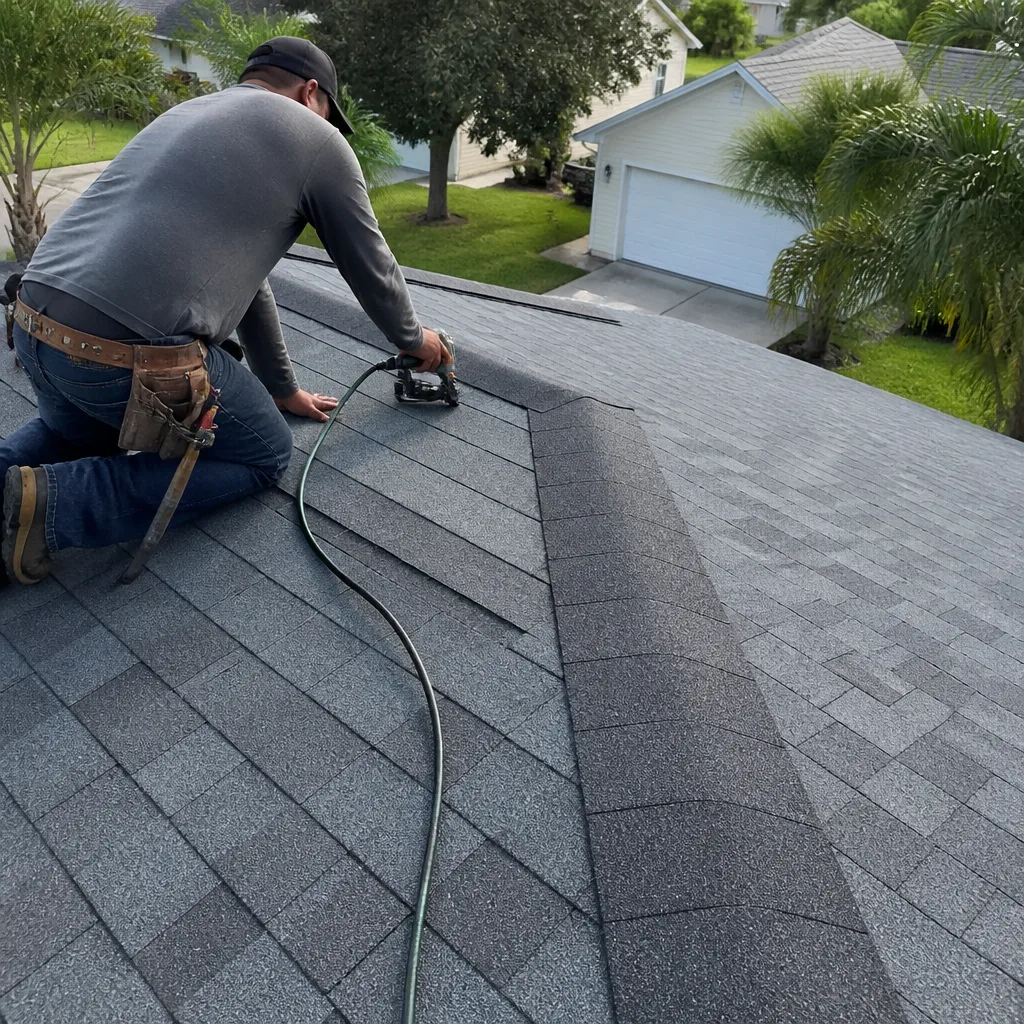
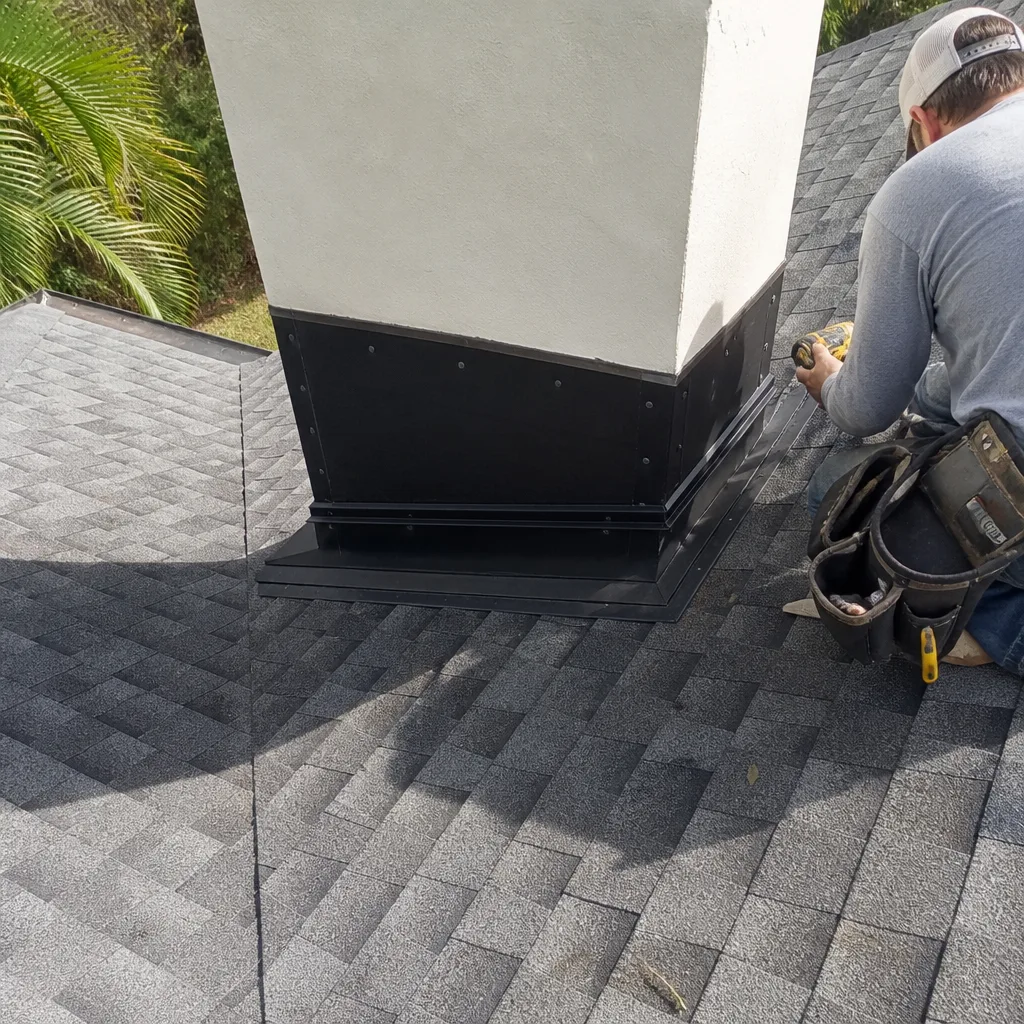
- Final inspection: The final inspection happens after the roof covering is fully installed and the job site is clean. The inspector checks the shingle fastening method (six nails per shingle in the 140 mph zone), the pattern and alignment, the ridge cap installation, the flashing integration at penetrations and valleys, and the overall water-shedding profile of the finished roof. The inspector also confirms the permit card is posted and the site is clear of debris.
A roof that fails a dry-in or final inspection means the contractor must correct the deficiency and call for a re-inspection. Inspectors in Orange County are specific about what they will fail: a row of shingles with only four nails, underlayment with wrinkles that trap water, drip edge that stops short of the corner, decking with open seams over a rafter. None of these are cosmetic. Each one is a documented failure point in a wind event.
Our crews at Tilehurst Roofing Orlando walk the roof before the inspector arrives and check the same items on the inspector’s list. We would rather find a missing nail ourselves at 7 a.m. than have the inspector find it at 10 a.m. and reset the inspection clock.
Who Pulls the Permit: Homeowner vs. Contractor Liability
Florida law allows a homeowner to pull an owner-builder permit for work on their own residence. This is legal, and it saves the fee markup some contractors add. It also transfers a specific set of liabilities onto the homeowner that most people do not understand until something goes wrong.
When a roofing contractor pulls the permit, the contractor’s name and state license number are on the permit record. The contractor is legally responsible for the work passing inspection, for the workers on the job being covered by workers’ compensation, and for the warranty on the installation. If the roof fails inspection, the contractor answers to the building department. If a worker is injured, the contractor’s insurance covers it, not the homeowner’s.
When a homeowner pulls an owner-builder permit, Florida law treats the homeowner as the contractor. That means:
- The homeowner is legally responsible for the work meeting code and passing inspection, even if the actual labor is done by a crew the homeowner hired.
- The homeowner may be liable for worker injuries on the property, because the homeowner acted as the general contractor and is responsible for job-site safety.
- The homeowner may have a harder time with an insurance claim if the roof later fails, because the insurer will ask who performed the work, and “I did, under my own permit, using a crew I found” is not the same as a licensed contractor’s documentation.
- The homeowner owns the permitting process end to end: filing the application, scheduling inspections, paying fees, and correcting any deficiencies the inspector flags.
Most homeowners in Orlando choose to let the roofing company pull the permit, and that is the standard we follow at Tilehurst Roofing Orlando. The permit number goes on every roof repair in Orlando we perform or full replacement, the inspections are scheduled by our office, and the homeowner receives a copy of the final approved inspection for their records. The homeowner’s only job is to be home for the inspections if they want to watch, which we encourage.
How Permitted Work Appears on Your Property Record and Why It Matters
Every permitted roof in Orange County creates a permanent record attached to the property’s parcel number. When the final inspection passes, the permit record is updated to “finaled” or “closed,” and that record lives in the county’s database permanently. A roof that was permitted and inspected in 2023 will show up in a title search in 2043.
This matters for two specific reasons: insurance and resale.
For insurance, the permit record is the document an adjuster pulls when you file a wind-damage claim. A finaled permit shows the roof was installed to the wind standard in effect at the time, with an inspector’s sign-off. An unpermitted roof has no such record. When a hurricane damages an unpermitted roof, the adjuster’s first question is whether the roof was legally installed. The answer, documented by the absence of a permit, can turn a full replacement claim into a partial repair claim or a denial.
For resale, the permit record appears on the seller’s disclosure and in the title abstract. A buyer’s inspector and lender will both ask about the roof. A permitted roof with a finaled inspection answers the question. An unpermitted roof creates a cloud: the buyer’s lender may require retroactive permitting (which is expensive and sometimes impossible if the work is already covered), the buyer’s insurer may decline to write a policy, or the buyer may walk entirely. In Orlando’s current market, where homes move quickly, an unpermitted roof is one of the most common reasons a deal falls apart at the eleventh hour.
We tell every homeowner the same thing: keep the finaled permit in a folder with the warranty documents. When you sell the house, hand that folder to the buyer. It is the cheapest goodwill you will ever generate in a real estate transaction.
What Permits and Inspections Actually Cost in Orange County
Roofing permit fees in Orange County are based on the valuation of the work, and they are not the largest line item in a roofing budget, but they are real. For a typical residential asphalt shingle roof in the $12,000 to $22,000 range, the permit and inspection fees in Orlando generally run between $250 and $600. That includes the permit application fee, the plan review fee (where applicable), and the inspection fees for the dry-in and final visits.
The exact number depends on:
- The city or county jurisdiction: A home inside Orlando city limits pays city fees; a home in unincorporated Orange County pays county fees. The rates are similar but not identical.
- The type of roof system: Tile and metal roofs often carry a higher valuation and therefore a higher fee than asphalt shingles.
- Whether the roof is a repair or a replacement: Full replacements are valued at the contract amount, which produces a higher permit fee than a repair valued at a few thousand dollars.
Here is a realistic cost breakdown for a typical Orlando shingle roof replacement with a $16,000 contract value:
- Permit application fee: $150 to $250
- Plan review (if triggered): $75 to $150
- Inspections (two standard visits): $100 to $200 combined
- Re-inspection (if a check fails, which it should not): $75 to $150 per visit
At Tilehurst Roofing Orlando, the permit fee is a line item on the written estimate, not a surprise at the end. Before any work starts, the homeowner has a written price that includes the permit, the materials, the labor, and the inspections. That written price, delivered before a single nail is driven, is part of the Kingswell Guarantee. A permit fee that appears for the first time on the final invoice is not a permit fee; it is a change order wearing a costume.
How Long the Permit and Inspection Process Takes
For a straight reroof with no complications, the timeline in Orlando typically runs like this:
- Permit application: 1 to 3 business days for review and issuance, assuming the application is complete and the roof system is a standard material that does not require engineering review.
- Dry-in inspection scheduling: The inspection is scheduled after the deck and underlayment are installed. In Orange County, inspections are typically next-day when scheduled before the cutoff time; same-day inspections are not standard.
- Final inspection scheduling: Same process, typically 1 to 2 business days after the roof is completed and the job site is cleaned.
- Total added time: A typical reroof adds 3 to 6 business days of permitting and inspection time on top of the 1 to 3 days of actual roof work. That is the honest number. Anyone promising a full permitted reroof from handshake to finaled permit in one day is not being straight with you.
Weather is the wildcard. In Orlando’s summer thunderstorm season, a dry-in inspection can slip a day because the inspector’s route is backed up, or because the crew cannot lay underlayment on a wet deck. Our Seasonal Roofing Care for Orlando: Year-Round Homeowner’s Guide explains how to plan around these patterns. We build that possibility into the schedule we give the homeowner. The Kingswell Way is to say the window we can actually hit, not the window that sounds good on the phone.
Common Mistakes to Avoid
- Skipping the permit to save $400. This is the most expensive $400 you will ever keep. The insurance denial on a wind-damage claim or the resale stall will cost tens of thousands.
- Letting a contractor talk you out of the permit. When a roofer says “we can save you the permit fee,” what they are really saying is “I do not want an inspector looking at my work.” Walk away.
- Splitting a repair to stay under 25%. Two repairs that each stay under the threshold, but together exceed it, can still trigger the code-compliance requirement when discovered. And insurers look at total roof condition, not at the calendar math.
- Pulling your own permit without understanding liability. Owner-builder permits are legal, but they make you the general contractor in the eyes of the law. Most Orlando homeowners are better served by a licensed contractor pulling the permit.
- Not keeping the finaled permit record. The permit is not just for the building department. It is your proof of a code-compliant roof. Lose it, and you lose the fastest way to satisfy a buyer’s lender or an insurance adjuster.
- Paying the full contract before the final inspection passes. No roofing company should require full payment before the final inspection is approved. A deposit and a payment at completion are normal; 100% upfront is not.
- Choosing materials without checking the wind rating. Not every shingle on a supply-house shelf is legal for Orlando’s 140 mph zone. The manufacturer’s Florida Product Approval matters.
When to Call a Professional
The permitting and inspection process is not the part of a roofing project a homeowner should navigate alone. Browse our more guides & resources to understand what to expect at every stage. If your roof needs work and you want it permitted, inspected, and documented correctly the first time, the fastest path is a licensed roofing contractor who handles the permit application, schedules the inspections, and walks the roof with the inspector. That is the service we provide at Tilehurst Roofing Orlando.
If you are buying a home in Orlando and the seller cannot produce a finaled permit for a roof that was clearly replaced after 2002, call a roofing professional before you close. The same applies if your insurer asks for a roof certification after a wind event. These are situations where a written, documented roof assessment changes the outcome.
Tilehurst Roofing Orlando offers free estimates in Orlando. Call (850) 303-7235 and a live person will answer, day or night. We will walk the roof, explain what the permit process requires for your specific home, and put the price in writing before any work starts.
Frequently Asked Questions
A roofing permit in Orlando typically costs between $250 and $600 for a standard residential asphalt shingle roof, depending on the contract valuation, the jurisdiction (city vs. county), and the roof system type. The fee is a line item on the written estimate from any contractor following the Kingswell Guarantee. Call (850) 303-7235 for an exact quote on your specific roof; estimates at Tilehurst Roofing Orlando are free.
No. Florida law requires a permit for roofing work that exceeds the repair threshold, and the 25% rule means most repairs beyond minor patching require a permit and inspection. Performing unpermitted roofing work creates a liability that affects insurance claims and resale, and it can result in code enforcement action from the county.
The 25% rule means that if more than 25% of the total roof area is repaired, replaced, or recovered within a 12-month period, the entire roof must be brought up to current Florida Building Code standards, including the fastening pattern, underlayment, and roof covering. This rule prevents partial patches from creating weak seams that fail in high wind.
A dry-in inspection checks the roof after the old material is stripped and the underlayment is installed, before the shingles go on. The inspector verifies the decking fastening pattern, the underlayment material and attachment, the drip edge, and the flashing at penetrations and transitions. This is the only point where the wind-load backbone of the roof is visible to inspection.
Yes. If a wind event damages an unpermitted roof, the insurer’s adjuster will look for a permit record. An unpermitted roof gives the insurer grounds to reduce or deny the claim because the installation was not verified to meet the wind standard. In some cases, the insurer may decline to renew the policy once the unpermitted roof is discovered.
A standard residential reroof permit in Orlando takes 1 to 3 business days for issuance, and the inspections add 3 to 6 business days to the overall project timeline. Weather and inspector scheduling in summer thunderstorm season can extend that by a day or two. The honest answer is that a fully permitted reroof takes about a week from start to finaled permit, not including the actual roof work.
The Bottom Line
In Florida, the roofing permit is the strongest consumer protection a homeowner has. It forces a third-party inspector to verify the wind-load components of your roof that you will never see from the ground, and it creates the permanent record that protects you when an insurance claim or a resale happens. The 25% rule, the 140 mph wind standard in Orlando, and the two-inspection process all exist because unpermitted roofs failed catastrophically in real storms. At Tilehurst Roofing Orlando, we pull the permit on every job, schedule the inspections, and put the price in writing before the first nail goes down. That is the Kingswell Way. Call (850) 303-7235 for a free estimate, and a live person will answer.
Written by Greg Holloway, Owner at Tilehurst Roofing Orlando, serving Orlando since 2000.
See the difference
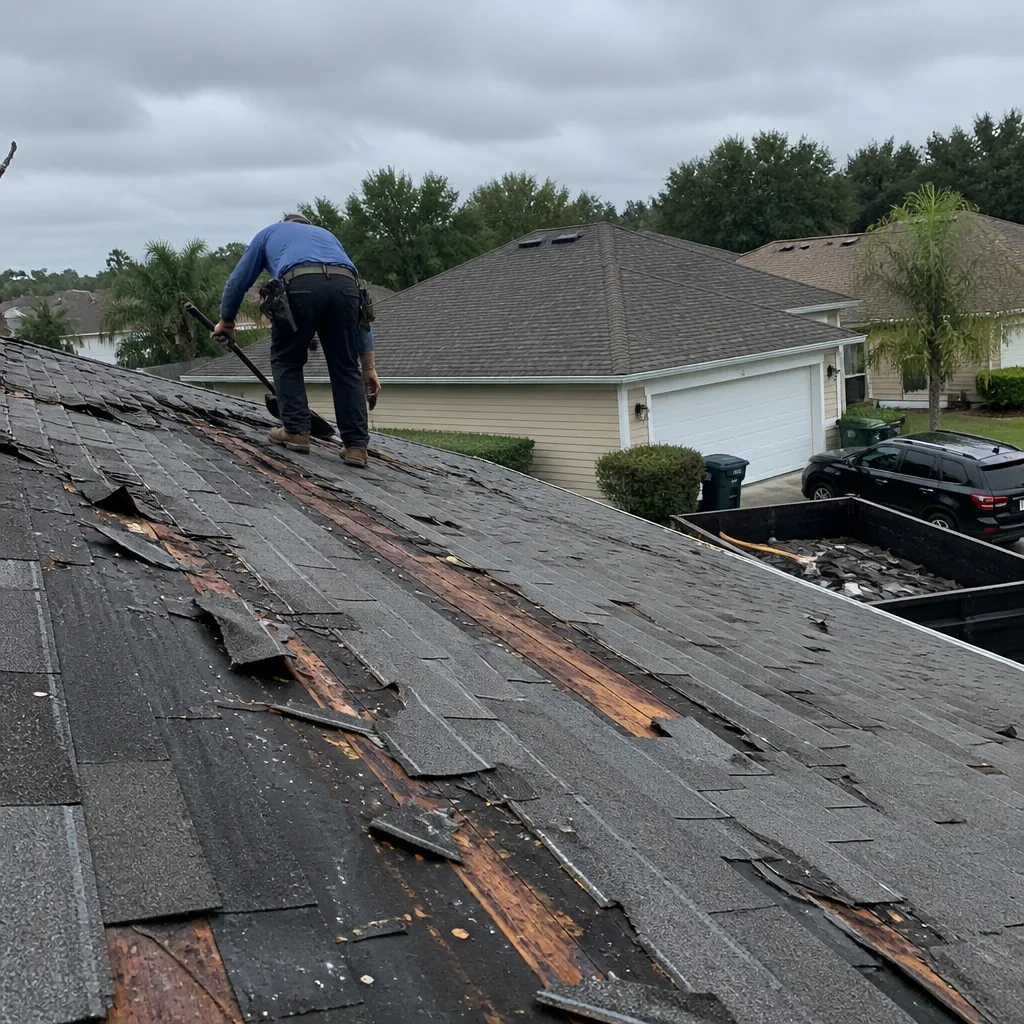 Before
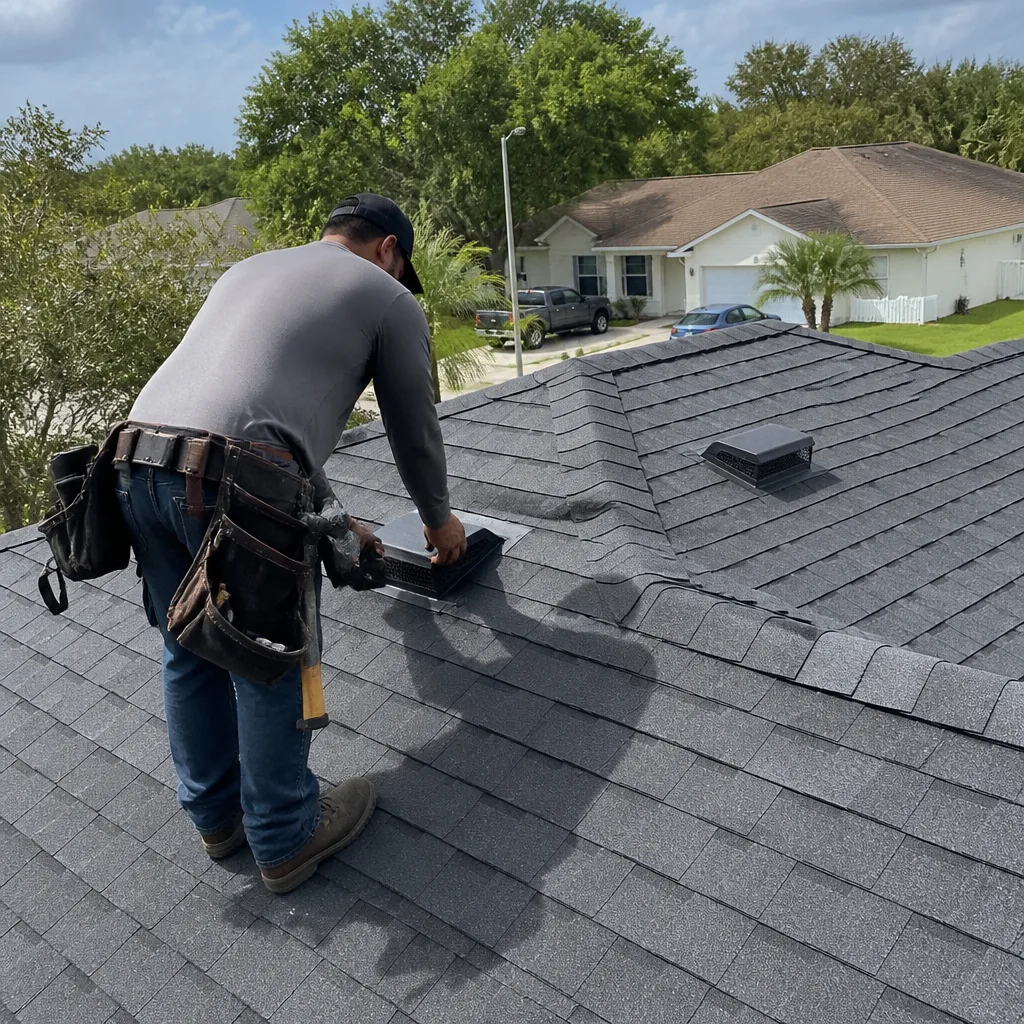 After
After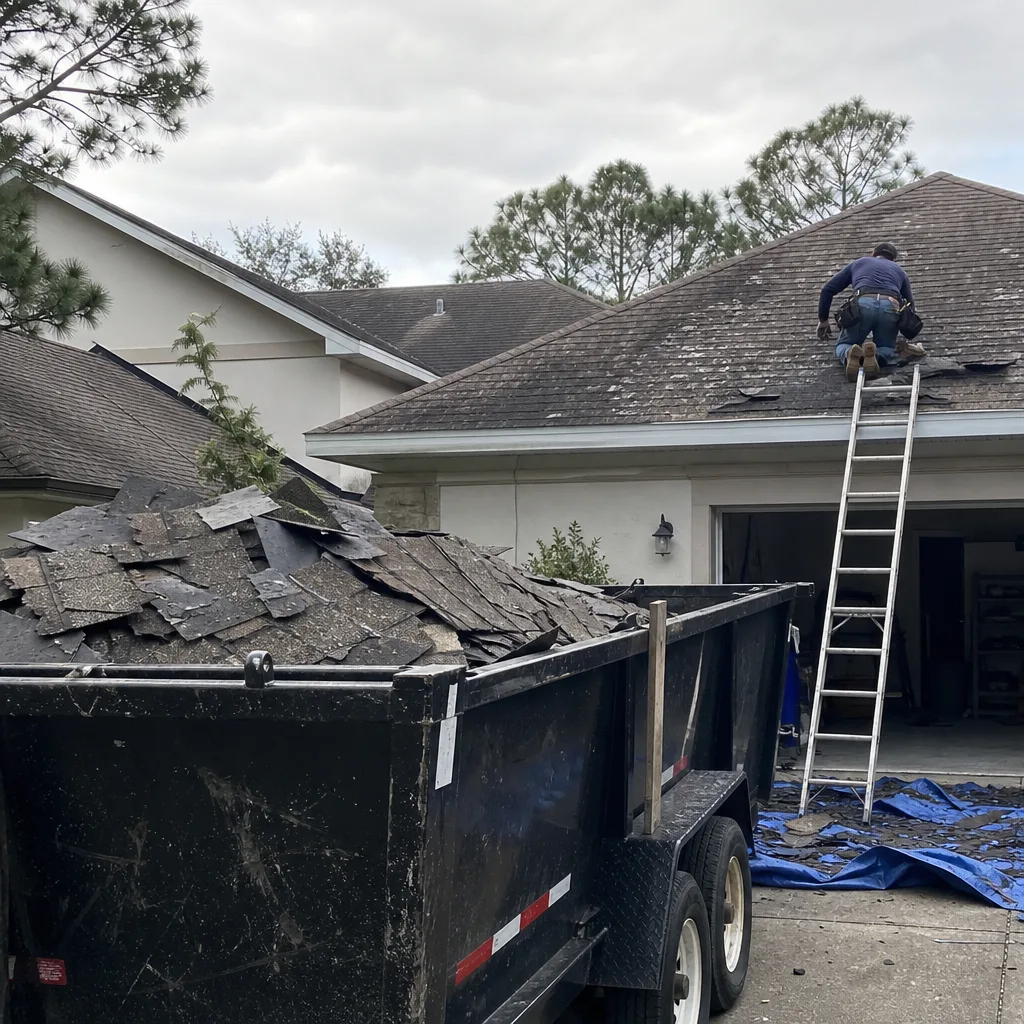 Before
 After
After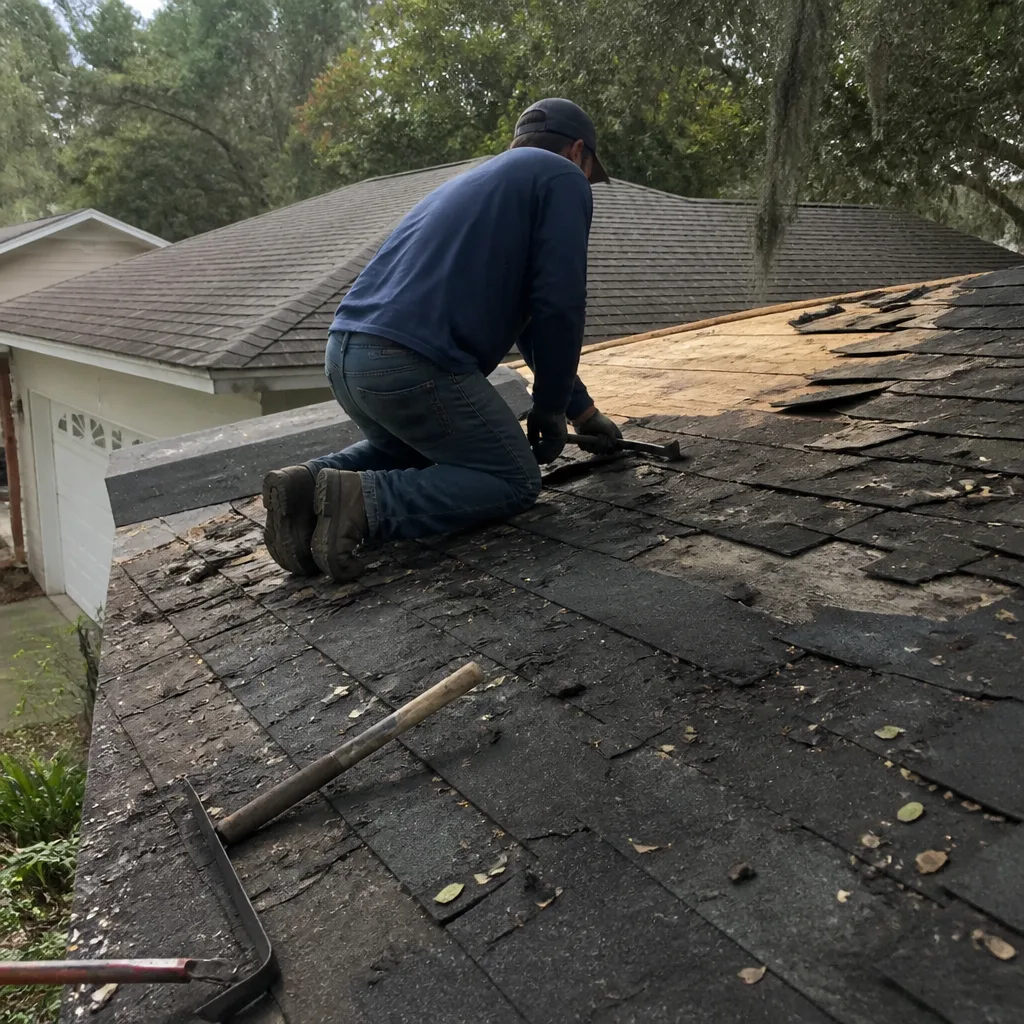 Before
 After
After